
Key takeaways
- Price range (2026): Case packers cost $30,000-$250,000+ in Australia depending on automation level, speed and product handling complexity.
- Entry-level semi-automatic: $30,000-$70,000 - operator-assisted product loading, 5-15 cases per minute, suited to single-shift operations under 500 cases/day.
- Mid-range automatic: $70,000-$150,000 - fully automatic product collation and case loading, 15-30 cases per minute, handles most FMCG and food production lines.
- High-speed robotic: $150,000-$250,000+ - robotic pick-and-place, 30-60+ cases per minute, multi-format capability for operations running 5+ SKU changes per shift.
- If your line packs more than 500 cases per shift → a mid-range automatic model eliminates 1-2 manual packing positions and reaches payback in 12-24 months.
- Labour replacement payback: Each manual packing position costs $60,000-$80,000/year loaded. A $120,000 automatic packer replacing 2 operators pays back in 9-15 months on a single shift.
- Annual running costs: $3,000-$12,000 covering servicing, wear parts (grippers, guides, belts), compressed air and changeover tooling.
- Depreciation: ATO effective life of 10 years for packaging machinery, with diminishing value rate of 20% or prime cost rate of 10%.
Case packer running costs and labour payback in Australia: The real numbers for 2026
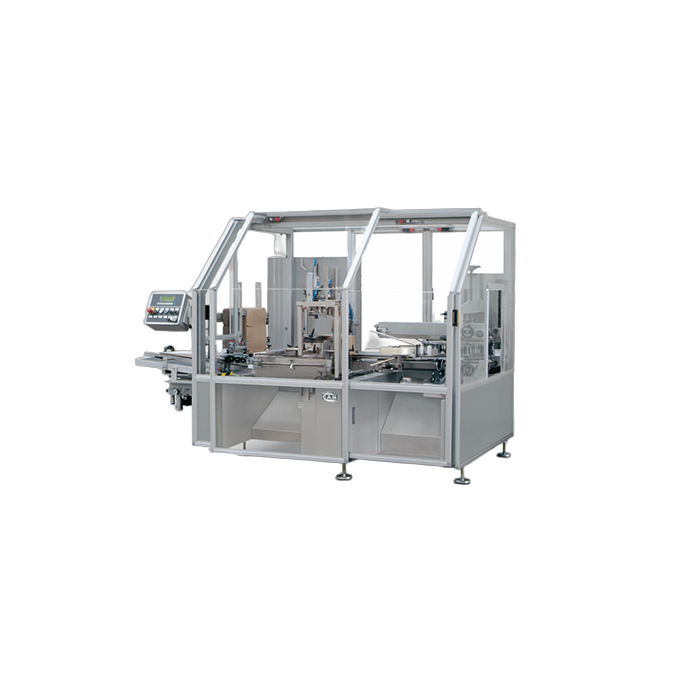
A case packer automates the process of collating products and loading them into corrugated cases - replacing what is typically the most labour-intensive step on an end-of-line packaging operation. In 2026, Australian manufacturers are automating case packing faster than any other end-of-line function as loaded labour costs exceed $70,000 per packing operator and case packing remains the station most vulnerable to throughput bottlenecks, RSI claims and quality inconsistency.
This guide breaks down purchase price, running costs, labour replacement modelling and depreciation for case packers in Australia so production managers and procurement leads can build a business case that survives finance approval. To compare pricing from verified Australian suppliers, get quotes for case packers on IndustrySearch where industrial buyers request and compare multiple quotes so they can buy with confidence. For a broader overview of types and configurations, see the case packer buying guide.
Operations where case packing automation is the standard specification:
- Food and beverage manufacturers running 500+ cases per shift
- Pharmaceutical and nutraceutical producers with GMP traceability requirements
- FMCG and personal care lines with high SKU counts and frequent changeover
- Contract packers running multiple client formats across shared lines
- Meat, dairy and chilled product operations where manual packing creates cold chain and hygiene risk
Choose your automation level
Before costing anything, confirm which automation level matches your line speed and labour model. Your choice here sets your price bracket and determines the labour positions the machine replaces.
Type | Speed | Best For |
|---|---|---|
Semi-automatic (top-load) |
5-15 cases/min |
Single-shift operations under 500 cases/day with 1-2 SKUs |
Automatic (top-load or side-load) |
15-30 cases/min |
Mid-volume FMCG and food lines running 500-2,000 cases/shift |
Robotic pick-and-place |
30-60+ cases/min |
High-speed lines, multi-format operations, fragile or irregularly shaped products |
If your line runs under 500 cases per day on a single shift - a semi-automatic model reduces manual effort without the capital commitment of full automation. If you run 500+ cases per shift or operate multi-shift - an automatic or robotic model eliminates 1-3 manual positions and delivers measurable payback within 12-24 months.
Evaluate the key specifications
With your automation level confirmed, these are the specs that determine whether a given model integrates with your existing line.
Specification | Typical Range | Buyer Consideration |
|---|---|---|
Cases per minute |
5-60+ |
Specify 20-30% above your peak requirement to avoid bottlenecking the upstream line |
Case size range |
200 x 150 x 100 mm to 600 x 400 x 400 mm |
Confirm the machine handles your smallest and largest case without tooling changes |
Changeover time |
5-30 minutes |
Operations running 5+ SKU changes per shift should specify tool-free changeover under 10 minutes |
Loading method |
Top-load, side-load or robotic |
Top-load suits stackable products; side-load suits heavy or fragile items; robotic handles mixed formats |
Line integration |
Standalone or inline |
Inline requires conveyor height matching, encoder sync and PLC communication - budget $5,000-$15,000 for integration |
Compressed air |
6-8 bar at 200-600 L/min |
Confirm your existing compressor can support the demand - an undersized compressor causes intermittent faults |
Understand the full cost breakdown (2026 prices)
Purchase price is only part of the picture - most business cases that fail at finance approval have missed the integration, wear parts and labour offset layer.
Category | Price Range (AUD) | Typical Configuration |
|---|---|---|
Semi-automatic |
$30,000-$70,000 |
Top-load, operator-assisted, 5-15 cases/min, single format |
Mid-range automatic |
$70,000-$150,000 |
Automatic collation and loading, 15-30 cases/min, multi-format capable |
High-speed robotic |
$150,000-$250,000+ |
Robotic pick-and-place, 30-60+ cases/min, vision-guided product handling |
Integration engineering |
$5,000-$15,000 |
Conveyor matching, PLC programming, encoder sync with upstream equipment |
Annual servicing |
$3,000-$8,000 |
Preventive maintenance, PLC diagnostics, pneumatic system checks |
Wear parts (annual) |
$2,000-$6,000 |
Grippers, guide rails, belts, suction cups - frequency depends on product abrasiveness |
Changeover tooling (per format) |
$1,500-$5,000 |
Additional case format tooling beyond the 1-2 formats included at purchase |
A mid-range automatic packer at $120,000 replacing 2 manual packing operators at $70,000/year loaded each saves $140,000 in labour annually. After integration ($10,000), servicing ($5,000/year) and wear parts ($4,000/year), net annual saving is $121,000 - payback in under 12 months on a single shift. On two shifts, the same machine replaces 4 operators and pays back in 5-6 months. Get quotes for case packers on IndustrySearch to model your specific payback timeline.
Plan the asset (depreciation and financing)
The ATO assigns packaging machinery an effective life of 10 years: 20% diminishing value rate or 10% prime cost rate. A mid-range case packer at $120,000 depreciates to approximately $70,800 after 3 years under diminishing value. Operations where volume is unproven or seasonal may benefit from hire purchase or operating lease arrangements at 5-8% over 3-5 years.
Case packers above the $20,000 instant asset write-off threshold for small businesses will need to be depreciated over the effective life. However, medium businesses using the simplified depreciation rules can pool assets costing $20,000+ and depreciate at 15% in year one and 30% thereafter. A $150,000 robotic packer generates a $22,500 deduction in year one under these rules.
Evaluate suppliers
You are ready to go to market. Use this checklist to assess each supplier against the same criteria.
Factor | What to Ask |
|---|---|
Speed and format range |
What is the rated speed at your case size? How many formats are included? |
Changeover time |
What is the changeover time between formats? Is it tool-free? |
Integration scope |
Is line integration included in the price? What PLC platform do you use? |
Wear parts availability |
Are grippers, belts and suction cups stocked in Australia? What is the lead time? |
Compressed air requirement |
What air supply does the machine need? Will my existing compressor support it? |
Warranty |
What warranty applies to the frame, motors, PLC and pneumatic components? |
FAT and SAT |
Is a factory acceptance test (FAT) included before shipping? Is SAT included at your site? |
Training |
Is operator and maintenance training included? How many days on-site? |
Remote diagnostics |
Does the machine support remote PLC access for fault diagnosis? |
Lead time |
What is the current lead time from order to commissioning? Are ex-stock units available? |
Frequently asked questions
At what production volume does a case packer justify the capital over manual packing?
Above 500 cases per shift, a mid-range automatic packer at $70,000-$150,000 replaces 1-2 manual positions and typically reaches payback in 12-24 months on a single shift.
What is the typical payback period for a robotic case packer?
A $150,000-$250,000 robotic packer replacing 2-3 operators per shift pays back in 10-18 months on a single shift. Multi-shift operations halve that timeline.
What are the main ongoing costs for a case packer beyond the purchase price?
Annual servicing ($3,000-$8,000), wear parts ($2,000-$6,000) and compressed air running cost ($1,000-$3,000). Budget $8,000-$15,000 total per year for a mid-range automatic model.
How long does changeover take between case formats?
Semi-automatic models take 15-30 minutes with manual adjustments. Automatic and robotic models with tool-free changeover run 5-10 minutes. Operations running 5+ SKU changes per shift should specify sub-10-minute changeover.
What is the ATO depreciation rate for a case packer?
The ATO effective life for packaging machinery is 10 years: 20% diminishing value or 10% prime cost. Medium businesses can pool assets over $20,000 and depreciate at 15% year one, 30% thereafter.
What matters most
- Automation level sets the payback: Semi-auto at $30,000-$70,000, automatic at $70,000-$150,000, robotic at $150,000-$250,000+.
- Labour replacement is the ROI driver: Each manual position costs $60,000-$80,000/year loaded - payback starts at 500+ cases per shift.
- Integration is not free: Budget $5,000-$15,000 for conveyor matching, PLC programming and encoder sync.
- Wear parts matter: $2,000-$6,000/year in grippers, belts and guides - confirm Australian parts availability before purchase.
- Changeover time: Operations with 5+ SKU changes per shift need tool-free changeover under 10 minutes.
Most production managers shortlist 2-3 suppliers after comparing speed ratings, integration scope and wear parts availability.
Do not waste time contacting suppliers individually. IndustrySearch gives you direct access to verified Australian case packer suppliers - where industrial buyers request and compare multiple quotes so they can buy with confidence.
- Get quotes for case packers - contact multiple verified suppliers with a single enquiry
- Compare models - filter by speed, loading method and region
- Contact suppliers directly - speak to specialists who service your state
→ Get and compare case packer quotes now →


-160x160-state_article-rel-cat.png)