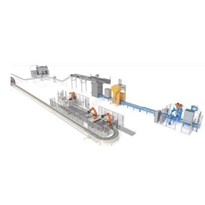


Get cartoning right and it runs quietly in the background for years. Get it wrong and it becomes the bottleneck that holds up everything upstream. Whether you're erecting, loading, or closing cartons, the machine you choose has to match the product, the pack format, and the way your plant actually runs, not the way a spec sheet says it should.
What to weigh up before you buy
Start with the application, not the machine. The right cartoner depends on your carton style; End-load or Top-load, Wraparound sleeve, or a Secondary multipack, and on the product going into it. Fragile biscuits, frozen foods, and free-flowing confectionery all behave differently on the floor, and each pulls the specification in a different direction.
From there, a few questions matter more than the headline speed:
Format range and changeover. How many carton sizes do you run, and how often do you switch? Quick, repeatable changeovers protect throughput far more than a high top speed you rarely reach.
Line integration. A cartoner rarely works alone. It needs to talk to the bagger or flow wrapper feeding it and the case packer or palletiser downstream. Buying the box in isolation is how you end up with a fast machine sitting behind a slow one.
Environment. Cold, wet, dusty, and washdown areas demand the right build. Reliability is set here, long before the first carton runs.
Support and spare parts. A machine is only as good as the help behind it. Local service and parts holdings decide how fast you're back running when something goes wrong.
Moving from manual to automatic
Plenty of manufacturers still hand-load cartons, and for low volumes that can be the right call. The case for automating usually builds on its own: labour is hard to find and harder to keep, manual packing struggles to hold a consistent pack presentation, and output rises and falls with whoever's on shift.
Automatic cartoning takes that variability out. It holds a steady rate, presents every carton the same way, and frees people up for work that actually needs them. The signs you're ready are familiar, you're paying overtime just to keep up, quality complaints trace back to inconsistent packing, or a new contract needs volume your current setup can't reach. You don't have to jump straight to full automation either; semi-automatic erecting or closing is often a sensible first step that de-risks the move.
Why reliability makes the difference
On a packing line, downtime is the expensive number. When a cartoner stops, everything upstream backs up and product you can't afford to lose starts piling behind it. That's why reliability isn't a feature to pay extra for, it should be the baseline. A well built cartoner matched to the right application, kept running by service and parts close to hand, quietly pays for itself every shift it doesn't stop. It's worth judging a solution on total cost of ownership over its life, not just the price on the quote.
Where Nupac can support
Nupac has spent more than 40 years helping Australian and New Zealand manufacturers match the right packaging solution to the job, backed by a local service team and spare parts when it matters. Cartoning is part of that, we can specify a cartoner as one element of a fully integrated line, from the bagger or flow wrapper through to the case packer and palletiser, rather than a box that sits on its own.
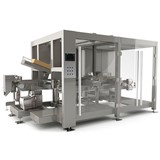
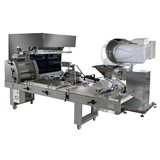
For cartoning, we supply Kliklok, the Syntegon Group's dedicated cartoning brand, with a proven range across end-load, top-load, forming, closing, and multipack applications. If you're weighing up a cartoning project, or the move from manual to automatic, we are always happy to support.






(17)-205x205.jpg)