
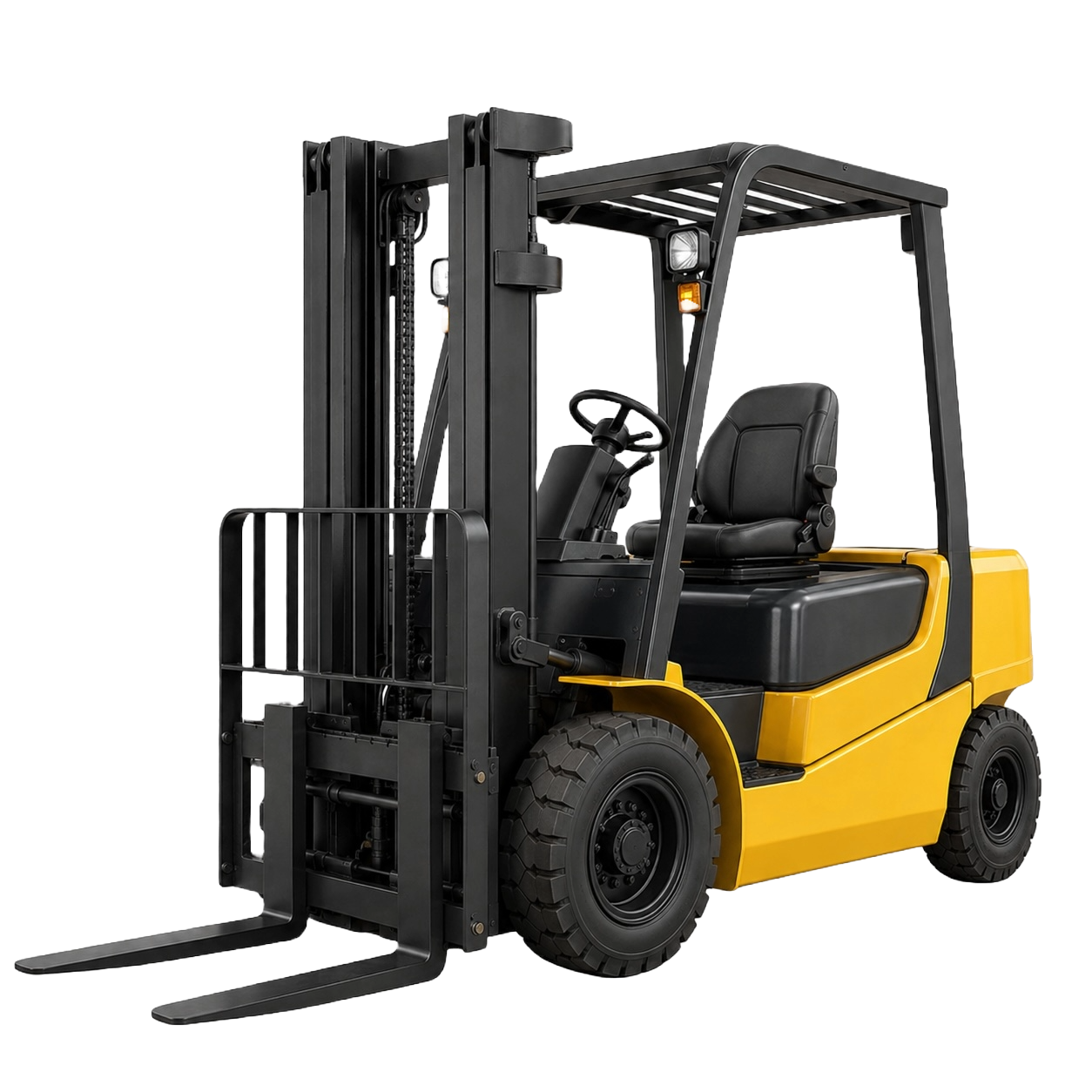

Diesel and LPG Forklifts: A Practical Guide for Outdoor Operations
Key takeaways
| Factor | Detail | What this means for you |
|---|---|---|
| Why IC forklifts dominate outdoors | Battery performance degrades in temperature extremes and on rough terrain — IC forklifts don’t | For outdoor and mixed-terrain operations, electric is rarely the right call regardless of what specs suggest |
| Most common sizing mistake | Matching capacity to average load rather than actual load centre | This is the error that creates safety incidents months after purchase — read the capacity section before you shortlist |
| Diesel vs LPG core trade-off | Diesel = higher torque; LPG = faster refuelling and mixed-environment flexibility | If your operation crosses into any semi-enclosed area, LPG’s compliance profile matters as much as its performance |
| True operating cost | $8,000–$22,000/year on top of purchase price | Over 10 years, maintenance and fuel typically equals or exceeds the purchase price |
| Licence requirement | LF class licence mandatory in every Australian state | No exemptions — confirm this before operations start, not after |
Pricing reflects 2026 Australian market conditions.
Why IC Forklifts Are the Outdoor Standard
IC forklifts are the working standard across construction yards, timber and steel merchants, agricultural operations, container depots and mining support. Battery technology simply doesn’t hold up to continuous outdoor use, temperature extremes and rough terrain the way IC engines do.
The costly mistakes in this category follow predictable patterns: an undersized unit pushed beyond rated capacity; a diesel forklift creating compliance problems when operations shift into a semi-enclosed loading dock; a mast specified to save cost that creates daily workarounds within months. This guide covers the specification decisions that prevent them.
Is this guide for you? If your operation involves unpaved surfaces, outdoor temperature extremes, or loads over 2.5 tonne — yes.
Capacity classes and pricing
| Type | Rated Capacity | Typical Application | Price Range (AUD) |
|---|---|---|---|
| Light duty | 1.5–2.5 tonne | Palletised goods, light construction | $20,000–$45,000 |
| Medium duty | 2.5–3.5 tonne | Building materials, timber, general freight | $35,000–$65,000 |
| Heavy duty | 3.5–5.0 tonne | Steel, concrete products, heavy pallets | $55,000–$90,000 |
| High capacity | 5.0–10.0 tonne | Container handling, bulk materials, ports | $80,000–$180,000+ |
| Used / refurbished | — | Validate hours, tyres, mast and engine | $8,000–$45,000 |
The capacity mistake that catches most operations out: Rated capacity is measured at a standard 500mm load centre. Loads on extended forks or carried at height reduce effective capacity — sometimes significantly. If your heaviest loads approach the rated figure, size up. This is the spec decision that determines whether your unit operates safely or becomes a WHS liability.
→ Most outdoor operations handling building materials land in the medium-duty 2.5–3.5 tonne class. Handling steel, concrete or containers? Move to heavy-duty or high-capacity. Compare forklifts by capacity on IndustrySearch to shortlist models in your bracket.
Diesel vs LPG: The real trade-offs
| Factor | Diesel | LPG |
|---|---|---|
| Fuel cost per hour | $2.50–$6.00 | $1.80–$4.50 |
| Emissions | Higher — exhaust fumes, particulates | Lower — cleaner combustion |
| Indoor use | Not recommended | Possible in well-ventilated areas |
| Torque at low speed | High — suited to heavy loads | Moderate |
| Refuel time | 5–10 minutes | 2–5 minutes (cylinder swap) |
| Best for your situation | Consistently heavy loads, purely outdoor rough terrain, on-site fuel infrastructure | Mixed outdoor/semi-enclosed environments, multi-shift operations, lower long-term service cost |
The compliance factor most operations miss: Diesel in partially enclosed environments — loading docks, covered yards, warehouse entries — creates diesel particulate matter (DPM) exposure that must be managed under WHS regulations. A documented ventilation assessment is required before diesel is a compliant choice in any semi-enclosed setting.
→ If your operation crosses into semi-enclosed environments, LPG’s compliance profile is as important as its refuelling advantage. Browse LPG forklifts or diesel forklifts from verified Australian suppliers.
What it actually costs to own one
Purchase price is where the conversation starts, not where it ends. Annual servicing, tyres, consumables and compliance inspections run $8,000–$22,000 on top. Over a 10-year operating life, total maintenance and fuel cost typically equals or exceeds what you paid upfront. The specification decisions you make at purchase are far more consequential than the sticker price suggests.
Most businesses finance this purchase — here’s what that looks like
A mid-range diesel at $50,000 typically runs $900–$1,100/month over a 5-year commercial finance term, depending on deposit, lender and business credit profile. For many operations, this is a better cash flow decision than tying up capital upfront — particularly when the same funds could cover the first year of servicing and consumables.
Used equipment finance is also available — lenders typically require a full service history and independent inspection for units above $15,000. → Get a commercial finance quote for your forklift — fast approval, no obligation.
Australian compliance requirements
These obligations apply before operations start. Getting this wrong creates liability that lands on whoever signed off on the purchase.
- LF class licence — mandatory for all operators in every Australian state; no exemptions
- Pre-operational inspection — required before every shift; documented in logbook or fleet management system
- Periodic formal inspection — every 6–12 months by a competent person; frequency is state-specific
- WHS obligations — forklifts are classified as plant; maintenance records must be retained and available for audit
- Diesel emissions — partially enclosed environments require a documented ventilation assessment for DPM compliance
- LPG cylinder handling — operators must be trained in safe handling under relevant Australian standards
Supplier comparison checklist
Use this before you request quotes — it’ll identify suppliers who know your category from those who’ll tell you what you want to hear.
| Factor | What to Ask |
|---|---|
| Capacity at load centre | Rated capacity at standard and extended load centre? |
| Engine and parts | Engine brand — parts stocked locally, typical lead times? |
| Tyre specification | Tyres specified for my surface conditions? |
| Mast configuration | Free lift height and maximum lift height? |
| Warranty | What’s covered, for how long, and what’s excluded? |
| Service coverage | Technicians in my state? Breakdown response time? |
| Used unit history | Full service history and independent inspection available? |
→ Suppliers who can’t answer these clearly are worth deprioritising. Request quotes from verified forklift suppliers on IndustrySearch — compare specs and service coverage in one place.
Frequently asked questions
Why do prices vary so much within the same capacity class?
Two 3-tonne forklifts can sit $20,000 apart. The main drivers: brand premium (Toyota, Linde and Hyster carry 15–25% over budget imports but typically deliver better resale value and local service networks), mast specification, transmission type and scope of supply. Always compare full configurations, not headline price.
Can a diesel forklift be used indoors at all?
It’s not a flat prohibition — it’s an exposure standard. Diesel particulate matter must stay below WHS limits, requiring a documented ventilation assessment for any partially enclosed use. Well-ventilated loading docks may pass; warehouse interiors typically don’t without mechanical ventilation. For confirmed indoor use, electric is the safer and more compliant specification.
Why doesn’t rated capacity tell the whole story?
Rated capacity is measured at 500mm load centre. Extended attachments or loads shifted forward reduce effective capacity below the rated figure. An operation running loads at 700mm load centre on a 3-tonne unit may be working at 2.4–2.6 tonne effective capacity — a gap that doesn’t surface until the operation is already running. This is the question most buyers only think to ask after the unit is on-site.
How long does an IC forklift last?
10,000–15,000 hours with correct maintenance. At 1,500 hours per year, that’s 7–10 years. Service discipline is the single biggest determinant of whether a unit reaches 12,000 hours or needs replacement at 7,000. If you’re considering forklift hire as an alternative to ownership, shorter-term operational needs may make it the more cost-effective option.
Ready to source your forklift?
IndustrySearch connects you with verified Australian forklift suppliers — compare diesel and LPG models, specifications and pricing without the back-and-forth.
- Compare models — filter by capacity, fuel type and configuration
- Request quotes — contact multiple verified suppliers with a single enquiry
- Contact suppliers directly — speak to specialists who service your state

-160x160-state_article-rel-cat.png)




-160x160-state_article-rel-cat.png)


-205x205.jpg)


