
Key takeaways
- Food metal detectors in Australia typically cost $8,000–$45,000+, depending on aperture size, detection sensitivity, conveyor integration and reject mechanisms.
- Conveyorised metal detection systems are the most common in automated food production, inspecting 60–300+ products per minute depending on line speed.
- Detection sensitivity typically ranges from 0.8 mm to 3.0 mm, depending on the type of metal contaminant and product characteristics.
- Food processing, packaging, confectionery, bakery, meat and dairy industries rely on metal detectors to comply with food safety standards and protect brand reputation.
- System aperture size and product effect are major factors affecting detection accuracy, particularly for high-moisture foods such as meat or dairy.
- Automated reject mechanisms allow contaminated products to be removed from the production line without stopping the system.
- Businesses typically invest in metal detection systems when production becomes automated or food safety compliance requirements increase.
Introduction
Food metal detectors are essential quality control systems used in food manufacturing and packaging lines to detect and remove metal contamination from products before they reach consumers.
Even small metal fragments can pose serious safety risks, lead to costly product recalls, and damage brand reputation. For this reason, many food manufacturers implement metal detection systems as a critical control point within their production processes.
These systems are widely used across industries including:
- food and beverage processing
- packaged foods and snacks
- bakery production
- meat and poultry processing
- dairy manufacturing
- confectionery production
Selecting the right food metal detector requires understanding system types, detection sensitivity, integration requirements and compliance considerations. This guide explains the key factors buyers should evaluate before investing in a system.
What is a food metal detector?
A food metal detector is an inspection system designed to detect metal contaminants within food products during production or packaging.
The system works by generating an electromagnetic field within a detection aperture. When metal passes through this field, the disturbance is detected and triggers an alarm or automated reject mechanism.
Most food production systems integrate metal detectors into conveyor lines so that products are inspected continuously during processing or packaging.
These systems are designed to detect three primary metal contaminants:
- Ferrous metals (iron and steel)
- Non-ferrous metals (aluminium, brass, copper)
- Stainless steel contaminants
Food metal detectors are typically installed at key control points such as:
- post-processing inspection
- packaging line inspection
- final product inspection before distribution
This allows contaminated products to be identified and removed before they reach the market.
Types of food metal detectors
Different system designs are used depending on production environments and product formats.
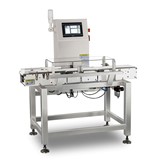
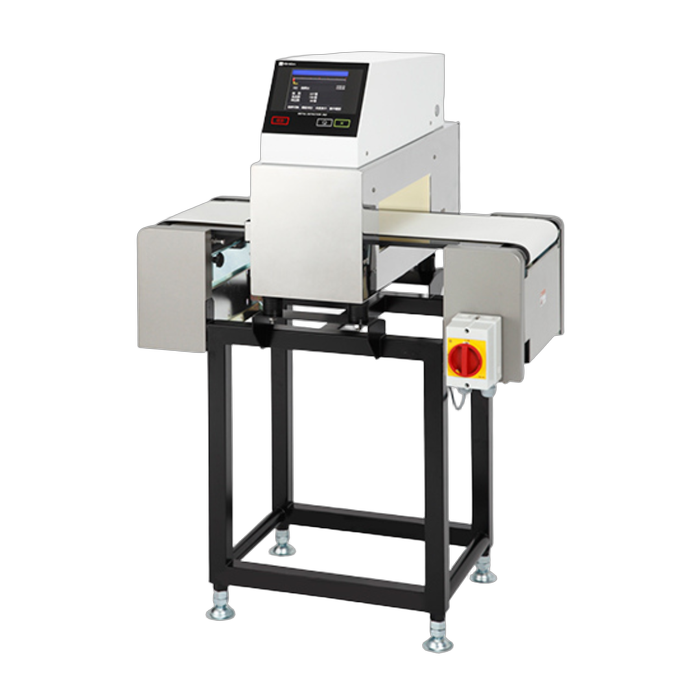
Conveyor metal detectors
Conveyor metal detectors are the most common systems used in food manufacturing.
These systems combine a metal detector head with a conveyor belt, allowing packaged or unpackaged products to pass through the detection aperture automatically.
Typical characteristics:
- Throughput: 60–300+ products per minute
- Common in automated production lines
- Often integrated with automatic reject systems
Common applications:
- packaged snack foods
- bakery items
- frozen foods
- ready-meal packaging lines
Advantages:
- continuous inspection
- high throughput
- automated contamination removal
Limitations:
- requires integration into conveyor systems
- installation space required
Gravity-feed metal detectors
Gravity metal detectors are designed for free-falling bulk food products, such as powders or granulated ingredients.
The system inspects product as it passes through a vertical pipe or chute during processing.
Typical applications:
- flour milling
- sugar processing
- grain handling
- powdered food ingredients
Advantages:
- high sensitivity
- compact system design
- suitable for dry bulk products
Limitations:
- not suitable for packaged goods
- limited to gravity-fed production processes
Pipeline metal detectors
Pipeline metal detectors are designed for liquid, slurry or paste-based food products.
These systems inspect product flowing through pipelines using sanitary stainless-steel housings suitable for hygienic food production environments.
Common applications include:
- dairy processing
- sauces and condiments
- meat slurry
- soups and liquid foods
Advantages:
- hygienic design
- compatible with washdown environments
- high detection sensitivity
Limitations:
- specialised installation required
- higher integration complexity
Key specifications buyers should consider
When evaluating food metal detectors, several technical specifications determine system performance and suitability.
Detection sensitivity
Sensitivity determines the smallest metal fragment a detector can identify.
Typical detection capabilities:
- Ferrous metals: 0.8–2.0 mm
- Non-ferrous metals: 1.0–2.5 mm
- Stainless steel: 1.5–3.0 mm
Detection sensitivity depends on:
- aperture size
- product composition
- product moisture content
- packaging materials
Aperture size
The aperture is the opening through which products pass.
Larger apertures reduce detection sensitivity because the electromagnetic field becomes less concentrated.
Buyers should choose the smallest practical aperture size that accommodates their product dimensions.
Throughput speed
High-speed production lines require detectors capable of operating at consistent inspection speeds.
Typical conveyor system speeds range from:
- 30–60 metres per minute for moderate production
- 60–120 metres per minute for high-speed packaging lines
Reject mechanisms
Automatic reject systems remove contaminated products without stopping production.
Common reject types include:
- air blast rejection
- pusher arms
- drop flap systems
- retracting conveyor belts
Selecting the correct reject mechanism depends on product type, weight and packaging format.
Typical price range in Australia
Food metal detector prices vary widely depending on system complexity and automation level.
| Equipment Type | Typical Price Range (AUD) | Typical Use Case |
| Entry-level standalone detector | $8,000 – $15,000 | Small production lines or manual inspection |
| Conveyor metal detector systems | $15,000 – $30,000 | Automated food packaging lines |
| Advanced integrated detection systems | $30,000 – $45,000+ | High-speed industrial food production |
Key price drivers include:
- conveyor integration
- detection sensitivity
- aperture size
- reject system automation
- washdown or hygienic construction
- brand and software capabilities
Operating costs and total cost of ownership
Food metal detectors generally have relatively low operating costs compared with many other production line systems.
However, buyers should consider lifecycle costs such as:
Maintenance
- routine inspection and calibration
- belt replacement for conveyor systems
- reject system servicing
Calibration and validation
Many food safety standards require routine detector validation using test pieces.
Downtime risk
System failure can halt production lines, so reliable equipment and servicing support are important.
Energy consumption
Metal detection systems consume relatively little power compared with other processing equipment.
Over the system lifecycle, reliability and detection accuracy often matter more than initial purchase price.
Infrastructure and installation considerations
Before installing a food metal detector, manufacturers should assess production line requirements.
Key considerations include:
Production line integration
Metal detectors must align with conveyor height, line speed and product spacing.
Available space
The system footprint must fit within the existing production line layout.
Power supply
Most systems require standard industrial power connections.
Hygienic design
Food processing environments may require stainless steel construction and washdown compatibility.
Operator training
Staff must be trained to validate detector performance and respond to contamination alerts.
Safety and compliance in Australia
Food manufacturers operating in Australia must comply with several food safety and quality assurance standards.
Common regulatory frameworks include:
- Food Standards Australia New Zealand (FSANZ) food safety regulations
- HACCP (Hazard Analysis and Critical Control Point) programs
- BRCGS food safety certification
- SQF food safety codes
Metal detection systems often form part of a facility’s critical control points within these frameworks.
Proper documentation, testing and system verification are essential to demonstrate compliance during audits.
When businesses typically upgrade to food metal detectors
Companies typically invest in metal detection systems when operational requirements increase.
Common triggers include:
- scaling production volumes
- transitioning from manual inspection to automated production
- meeting retailer or export food safety requirements
- reducing contamination risks
- improving product quality assurance
In many food manufacturing environments, metal detection becomes a mandatory process as operations expand.
How to choose the right food metal detector
Selecting the right system requires evaluating several operational factors.
Buyers should consider:
Product type
Liquids, powders and packaged foods require different detection systems.
Production speed
High-speed packaging lines require detectors capable of operating at high throughput rates.
Detection sensitivity requirements
Food safety programs may specify minimum detection capabilities.
Integration with existing equipment
The system must align with conveyor systems, pipelines or gravity feeds.
Total cost of ownership
Maintenance, calibration and servicing support affect long-term costs.
A structured evaluation of these factors helps manufacturers select a system that supports both production efficiency and regulatory compliance.
FAQ: Food metal detectors
How much does a food metal detector cost in Australia?
Food metal detectors typically cost $8,000 to $45,000+, depending on system design, sensitivity, automation features and integration requirements.
What industries use food metal detectors?
Common industries include:
- food processing
- packaged food manufacturing
- meat and poultry production
- bakery production
- dairy manufacturing
- confectionery processing
How accurate are food metal detectors?
Detection sensitivity typically ranges between 0.8 mm and 3.0 mm, depending on metal type, product characteristics and detector configuration.
Can metal detectors detect stainless steel?
Yes. Most modern food metal detectors can detect stainless steel contaminants, although sensitivity may be slightly lower compared with ferrous metals.
Where should metal detectors be installed in production lines?
Metal detectors are typically installed:
- after product processing
- after packaging
- before product distribution
This ensures contamination is detected before products leave the facility.
Can metal detectors integrate with automated production lines?
Yes. Conveyor metal detectors can integrate with packaging equipment, automated reject systems and production line control systems.
How often should metal detectors be tested?
Many food safety standards require routine testing with certified test pieces, often hourly or per production shift, depending on facility procedures.
Conclusion
Food metal detectors play a critical role in protecting product safety, maintaining regulatory compliance and preventing costly contamination incidents.
Because production environments and food products vary widely, selecting the right detection system requires careful evaluation of system types, detection sensitivity, integration requirements and long-term operating costs.
By understanding these factors, manufacturers can implement metal detection systems that support both operational efficiency and food safety assurance.
Compare food metal detectors from Australian suppliers
On IndustrySearch, businesses can explore food metal detector systems from verified Australian suppliers, compare key specifications such as detection sensitivity, conveyor speed and automation features, and request quotes directly from suppliers servicing their region.
By comparing multiple suppliers, buyers can evaluate:
- pricing across different system configurations
- detection sensitivity and inspection capabilities
- installation and integration support
- servicing, calibration and warranty options
Requesting quotes allows manufacturers to identify the most suitable food metal detection system for their production environment and compliance requirements.
```