

Key takeaways
- checkweighers usually cost $8,000–$25,000, commonly used in smaller packaging operations.
- Mid-range industrial checkweighers generally range from $25,000–$60,000, offering higher speeds and improved weighing accuracy.
- High-speed automated checkweighing systems can cost $60,000–$120,000+, especially when integrated with reject mechanisms and production lines.
- Throughput speed and weighing precision are the biggest price drivers, particularly in food and pharmaceutical production environments.
- Operating costs are relatively low, but maintenance, calibration, and conveyor components should be considered in total ownership costs.
- Businesses typically invest in checkweighers when production volumes increase or compliance requirements demand consistent weight verification.
Introduction
Checkweighers are automated weighing systems used to verify that packaged products meet predefined weight specifications. They are widely used in production lines where maintaining consistent product weight is essential for regulatory compliance, cost control and product quality.
Industries that commonly rely on checkweighers include:
- food and beverage processing
- pharmaceutical manufacturing
- cosmetics production
- logistics and packaging operations
- retail distribution centres
- e-commerce fulfilment facilities
Checkweighers help manufacturers detect underweight or overweight products before they leave the production line. This reduces product giveaway, prevents regulatory breaches and ensures consistent product quality.
However, the cost of checkweighing equipment varies significantly depending on throughput speed, weighing precision and production integration requirements. Businesses evaluating checkweighers should therefore consider both purchase price and long-term operating costs.
This guide explains typical checkweigher prices in Australia, key cost drivers and what buyers should expect when budgeting for a system.
What is a checkweigher?
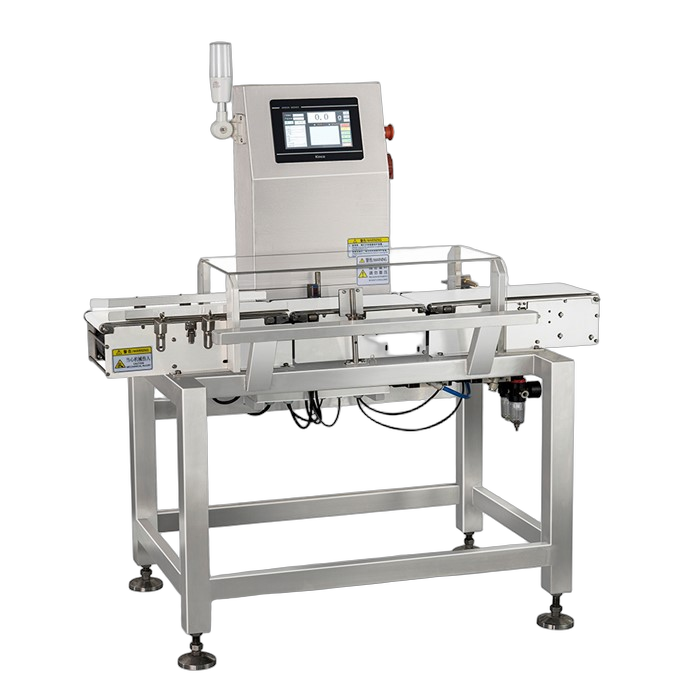
A checkweigher is an automated inspection system designed to weigh products while they move along a production line. The system compares each product’s weight against preset limits and automatically identifies items that fall outside the acceptable range.
Unlike static weighing scales, checkweighers operate continuously during production, allowing manufacturers to verify product weight without slowing down packaging operations.
Checkweighers are typically used for:
- verifying packaged food weights
- ensuring pharmaceutical dosage compliance
- detecting packaging errors
- reducing product giveaway
- maintaining quality control on high-speed production lines
In many industries, checkweighers also integrate with reject systems, automatically removing non-conforming products from the production line.
Types of checkweighers
Several different types of checkweighers are available, each designed for different production environments and throughput requirements.
Static checkweighers
Static checkweighers weigh products while they are stationary on the weighing platform.
Typical characteristics
- lower throughput speeds
- manual or semi-automated operation
- lower equipment cost
Typical applications
- small packaging operations
- quality control sampling
- low-volume production lines
Advantages
- lower upfront investment
- simple installation
- minimal maintenance
Limitations
- slower inspection speeds
- not suitable for continuous high-volume production
In-motion conveyor checkweighers
In-motion checkweighers weigh products as they move across a conveyor belt.
Typical characteristics
- continuous product weighing
- moderate to high production speeds
- automatic rejection systems
Typical applications
- food packaging lines
- beverage bottling plants
- consumer goods manufacturing
Advantages
- high throughput capacity
- automated product rejection
- improved production efficiency
Limitations
- higher purchase cost
- more complex installation
High-speed production checkweighers
High-speed checkweighers are designed for fast production environments where thousands of items must be weighed per hour.
Typical characteristics
- very high throughput speeds
- extremely precise load cells
- integration with automated production lines
Typical applications
- pharmaceutical manufacturing
- large food production facilities
- high-volume packaging plants
Advantages
- exceptional weighing accuracy
- seamless integration with automated systems
- improved production quality control
Limitations
- significantly higher cost
- specialised installation requirements
Typical price range for checkweighers in Australia
The cost of checkweighing systems varies depending on production requirements, equipment features and integration complexity.
Entry-level checkweighers
Typical price range: $8,000 – $25,000
These systems are generally suitable for:
- small packaging operations
- low production speeds
- basic weight verification tasks
Common features include:
- simple conveyor systems
- basic weight detection
- manual product handling
Mid-range industrial checkweighers
Typical price range: $25,000 – $60,000
These systems are designed for continuous industrial production lines.
Common features include:
- automated reject systems
- higher weighing accuracy
- moderate production speeds
- integration with packaging lines
These systems are commonly used in food processing and consumer goods manufacturing.
High-speed automated checkweighers
Typical price range: $60,000 – $120,000+
These advanced systems are typically installed in:
- pharmaceutical production
- large food manufacturing plants
- high-volume packaging facilities
Features often include:
- ultra-precise load cells
- high-speed conveyors
- integrated reject systems
- production data monitoring
- automated quality control reporting
Key factors that affect checkweigher cost
Several factors influence the final price of a checkweighing system.
Weighing accuracy
Higher precision load cells increase system cost.
Industries such as pharmaceuticals require extremely accurate measurement systems.
Throughput speed
High-speed production environments require more sophisticated conveyor systems and sensors.
Higher throughput capability significantly increases equipment price.
Product size and weight range
Checkweighers designed for large or heavy products require larger conveyor structures and stronger load cells.
Integration with production lines
Systems integrated with automated packaging lines often require:
- reject mechanisms
- sensors
- software integration
- data logging systems
These features increase equipment cost.
Environmental requirements
Specialised environments may require:
- stainless steel construction
- washdown designs
- hygienic food-grade materials
These factors can increase system price.
Operating costs and maintenance
Checkweighers generally have relatively low operating costs, but several lifecycle expenses should be considered.
Calibration and servicing
Regular calibration ensures weighing accuracy and compliance with quality standards.
Most manufacturers recommend periodic inspection and calibration.
Conveyor and mechanical components
Wear components such as:
- conveyor belts
- motors
- bearings
may require periodic replacement depending on usage intensity.
Energy consumption
Checkweighers consume relatively small amounts of electricity compared with other production equipment. However, large automated systems may still contribute to operational energy costs.
Downtime risk
Production lines depend on reliable inspection equipment.
Preventative maintenance can reduce downtime and maintain consistent production flow.
Safety and compliance in Australia
National measurement institute (NMI) and the average quantity system (AQS)
In Australia, checkweighers often play an important role in helping manufacturers comply with regulations enforced by the National Measurement Institute (NMI).
Businesses that package products for retail sale must follow the Average Quantity System (AQS), which governs the allowable weight variation for pre-packaged goods.
Under AQS requirements:
- The average net content of a sample of packages must not be less than the declared quantity on the label.
- Individual packages must not exceed the allowable tolerable deficiency limits defined by regulation.
Automated checkweighers help manufacturers monitor product weight during production and identify packages that fall outside acceptable limits.
While internal production checkweighers are not always required to be NMI trade-approved (unless they are used as the official legal-for-trade measuring device), accurate systems are commonly used to:
- support internal quality control programs
- reduce the risk of regulatory non-compliance
- minimise product giveaway from overfilling packages
For many food, pharmaceutical and consumer goods manufacturers, checkweighers are therefore an important part of maintaining consistent product weight and regulatory compliance.
When businesses typically invest in checkweighers
Companies often install checkweighers when production scale increases or quality control requirements become stricter.
Common triggers include:
- increased production throughput
- manual weighing becoming inefficient
- quality control requirements increasing
- regulatory compliance obligations
- product giveaway becoming costly
Automated checkweighing systems help manufacturers maintain consistent product weight while reducing labour requirements.
How to choose the right checkweigher
Procurement teams should evaluate several operational factors before selecting a system.
Important considerations include:
- Production speed
- Product weight range
- Required weighing accuracy
- Production line integration
- Environmental conditions
- Future production growth
FAQ
How much does a checkweigher cost in Australia?
Most checkweighers cost between $8,000 and $120,000, depending on speed, accuracy and automation features.
What industries use checkweighers?
Checkweighers are widely used in food production, pharmaceuticals, cosmetics manufacturing, logistics and packaging operations.
Are checkweighers required for food production?
While not always mandatory, checkweighers are commonly used to ensure packaged food products meet labelled weight requirements.
How accurate are industrial checkweighers?
High-quality systems can measure weights with very high precision, depending on product size and system configuration.
Can checkweighers integrate with packaging lines?
Yes. Most industrial checkweighers integrate directly with automated packaging equipment and can include reject mechanisms and data monitoring systems.
Do checkweighers require regular maintenance?
Routine maintenance typically includes calibration checks, conveyor inspections and sensor verification.
What is the difference between static and in-motion checkweighers?
Static systems weigh products while stationary, while in-motion systems weigh items as they move along production conveyors.
Conclusion
Checkweighers play an important role in modern manufacturing and packaging operations by ensuring products meet defined weight standards. Automated systems help businesses reduce product giveaway, maintain quality control and comply with industry regulations.
The cost of checkweighing equipment varies depending on production speed, weighing accuracy and system integration requirements. Businesses evaluating these systems should focus on operational suitability and total cost of ownership, rather than simply selecting the lowest purchase price.
Compare checkweigher suppliers on IndustrySearch
On IndustrySearch, businesses can explore checkweigher systems from verified Australian suppliers, compare specifications such as weighing accuracy, conveyor speed and reject mechanisms, and request quotes directly from suppliers that service their region.
Comparing multiple suppliers allows buyers to evaluate:
- pricing across different equipment models
- weighing accuracy and throughput capabilities
- conveyor configurations and reject systems
- warranty and servicing support
- delivery and installation timelines
Requesting multiple quotes can help businesses identify the most suitable checkweighing solution for their production requirements, operational environment and budget.






-205x205.jpeg)
