
Mini Excavator Price Guide Australia: Equipment Costs, Running Expenses and ROI
Key takeaways
| Factor | Detail |
|---|---|
| Micro (under 1 tonne) | $28,000–$45,000 AUD new |
| Compact (1–2 tonne) | $40,000–$65,000 AUD new |
| Small frame (2–4 tonne) | $60,000–$90,000 AUD new |
| Mid-size (4–6 tonne) | $85,000–$120,000 AUD new |
| Midi (6–10 tonne) | $110,000–$170,000 AUD new |
| Used / refurbished units | $18,000–$85,000 AUD depending on age, hours and condition |
| Annual operating costs | $7,000–$18,000 depending on utilisation and application |
| Break-even vs hire | Approximately 10–15 hire weeks per year |
| Track replacement cost | $3,000–$8,000 depending on size class |
| Typical ROI period | 2–4 years for commercial operators replacing hired equipment |
Pricing reflects 2026 Australian market conditions.
→ If you're still working out which size class fits your application, the price gap between compact and mid-size machines is significant — confirm your access constraints and digging depth requirements before settling on a size. Compare mini excavators on IndustrySearch to see what's available at each price point.
What drives mini excavator prices in Australia
New to buying excavators? Here's what actually moves the price needle:
- Size and weight — the biggest driver. Every step up in size class adds $20,000–$40,000 to the base price
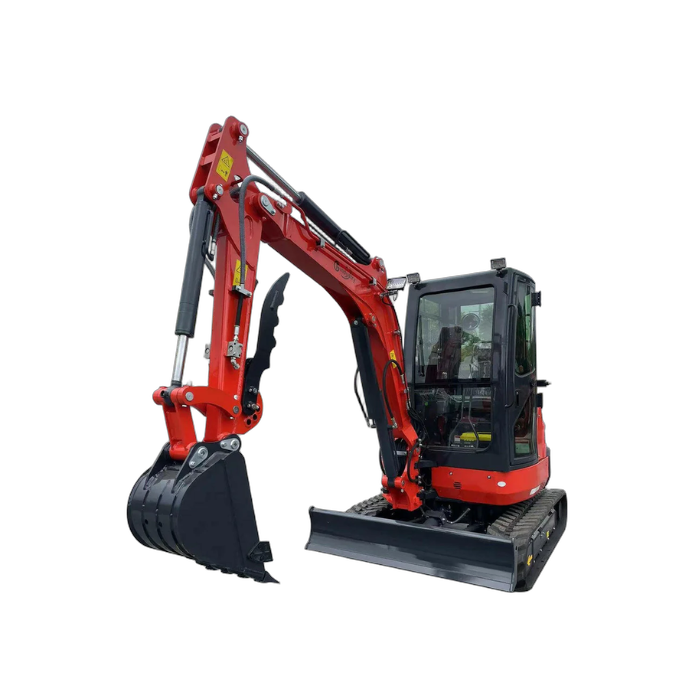
- Zero-swing vs standard tail — zero-swing models (where the rear stays within the track width) add $5,000–$12,000 but are essential for tight urban sites
- Brand and dealer network — major brands (Kubota, Kobelco, Caterpillar, Komatsu, Yanmar, Hitachi) carry a 15–25% premium over lesser-known imports, but offer stronger resale value and better Australian service coverage
Always confirm whether quoted prices are drive-away or exclude GST, delivery and dealer preparation.
Purchase price by size class
| Size Class | Operating Weight | Digging Depth | Price Range (AUD) | Best For |
|---|---|---|---|---|
| Micro (under 1 tonne) | 600–900 kg | 1.5–2.0 m | $28,000–$45,000 | Indoor, very tight access, residential gardens |
| Compact (1–2 tonne) | 1,000–2,000 kg | 2.0–2.8 m | $40,000–$65,000 | Landscaping, residential construction, confined sites |
| Small frame (2–4 tonne) | 2,000–4,000 kg | 2.8–3.8 m | $60,000–$90,000 | General construction, service trenching, urban civil |
| Mid-size (4–6 tonne) | 4,000–6,000 kg | 3.5–4.5 m | $85,000–$120,000 | Civil works, deeper trenching, pipeline installation |
| Midi (6–10 tonne) | 6,000–10,000 kg | 4.0–5.5 m | $110,000–$170,000 | Heavy civil, bulk excavation, demolition support |
| Used / refurbished | Variable | Variable | $18,000–$85,000 | Budget buyers — validate hours, tracks and hydraulics |
Most construction and civil contractors specify small-frame to mid-size machines in the $60,000–$120,000 range. Midi excavators suit civil and infrastructure projects where digging depth and productivity justify the cost over a full-size machine.
→ Most buyers land between small-frame and mid-size — if your work spans light residential and service trenching, the 2–4 tonne class is the most flexible starting point. Browse mini excavators on IndustrySearch or compare options in Sydney and Brisbane.
Zero-swing vs standard tail
| Factor | Zero-Swing | Standard Tail |
|---|---|---|
| Tail overhang | Within track width | Extends beyond track width |
| Working near structures | ? Flush against walls and fences | ? Requires clearance |
| Urban residential sites | ? Standard specification | ? Often problematic |
| Price premium | $5,000–$12,000 over equivalent model | Base price |
| Best for | Urban construction, confined access | Open sites, rural, civil with clear swing zone |
Specify zero-swing for any operation where work regularly occurs within 1–2 metres of boundaries or structures. Specify standard tail for open civil and rural applications where swing clearance is not a constraint.
→ Working residential or infill sites in metro areas? Zero-swing is effectively non-negotiable — losing a job due to access constraints costs more than the price difference. For open rural sites, standard tail is the better value call. See zero-swing and compact models on IndustrySearch.
Attachment costs
| Attachment | Price Range (AUD) | Application |
|---|---|---|
| Digging bucket (standard) | $800–$2,500 | General excavation |
| Grading / clean-up bucket | $1,200–$3,000 | Finishing, levelling, backfill |
| Hydraulic breaker | $4,000–$12,000 | Rock, concrete, demolition |
| Hydraulic thumb | $1,500–$3,500 | Rock, debris, pipe handling |
| Auger drive + bit | $3,500–$9,000 | Post holes, footings, piers |
| Compaction wheel | $3,000–$7,000 | Trench backfill compaction |
| Ripper | $1,200–$3,000 | Hard ground, root breaking |
| Grading blade | $2,500–$5,500 | Site levelling, backfill spreading |
Most operators purchase 2–3 attachments at acquisition. A hydraulic breaker and grading bucket alongside the standard digging bucket covers the majority of construction and civil applications. Confirm hydraulic flow and pressure compatibility before purchasing any powered attachment.
→ Build your attachment budget into the total machine cost from day one — it's easy to underestimate. A breaker, grading bucket and standard digging bucket will cover most job types without overcommitting upfront.
Annual operating costs
| Cost Item | Annual Cost (AUD) | Notes |
|---|---|---|
| Fuel | $3,500–$10,000 | 800–2,000 hours/year at 3–8 L/hour |
| Scheduled servicing | $2,000–$4,500 | Every 250–500 hours |
| Track wear (amortised) | $800–$2,500 | Full replacement $3,000–$8,000 every 1,200–2,000 hours |
| Wear parts | $400–$1,500 | Bucket teeth, cutting edges |
| Insurance | $1,200–$3,500 | Commercial plant insurance |
| Transport (trailer moves) | $2,000–$8,000 | Depends on site frequency and distance |
| Total annual cost | $7,000–$18,000 | Mid-utilisation commercial operation |
Transport is a significant recurring cost that wheeled machines avoid. Operators moving between multiple sites weekly should factor trailer ownership or hire costs into total cost of ownership — or consider whether a backhoe loader's self-propelled capability justifies its higher purchase price.
→ The gap between $7,000 and $18,000 annually is almost entirely determined by utilisation hours and site move frequency. If you're running 1,500+ hours per year across multiple sites, transport becomes your second-largest cost after fuel — build that into your ROI model before committing. Compare equipment finance options on IndustrySearch.
New vs used
| Factor | New Unit | Used Unit |
|---|---|---|
| Purchase price | $40,000–$170,000 | $18,000–$85,000 |
| Warranty | Full manufacturer (1–3 years) | Limited or none |
| Track condition | New | Inspect remaining life |
| Hydraulic condition | New | Inspect for leaks and wear |
| Best for | High-utilisation commercial operations | Lower-utilisation or budget-constrained buyers |
Key inspection points on used units: track wear, hydraulic cylinder condition, boom and arm pin wear, undercarriage frame condition, and hour meter authenticity. Always request full service records and arrange an independent pre-purchase inspection for any unit above $30,000.
→ Used machines under 3,000 hours with verified service history can save $30,000–$50,000 over a comparable new unit — but the due diligence is real. See the 2026 used excavator price guide for condition-based valuation detail, and review how to finance second-hand industrial equipment before approaching a lender.
Hire vs buy
| Factor | Hire | Purchase |
|---|---|---|
| Daily rate | $350–$750/day | — |
| Weekly rate | $1,500–$3,000/week | — |
| Break-even threshold | — | ~10–15 hire weeks/year |
| Maintenance responsibility | Hire company | Owner |
ROI scenario — small-frame machine at moderate utilisation
- Machine cost: $75,000 (small-frame, 2–4 tonne)
- Hire equivalent: $1,500–$3,000/week
- Break-even: 10–15 weeks of hire per year
- Payback period: 2–3 years at consistent utilisation
- Annual billable output: $64,000–$130,000 at $80–$130/hour across 800–1,000 hours/year
→ The hire vs buy decision is a utilisation question. Hiring more than 3 months per year? The numbers almost always favour purchase. Use the break-even figures above as your benchmark, then factor in transport and servicing costs before committing.
Australian compliance and licensing
- No high-risk work licence required in most states — operator competency training and assessment is mandatory under WHS obligations
- Pre-operational checks, documented competency assessment and plant maintenance records required
- ROPS and FOPS mandatory on all units — verify on any used or imported machine
- Trailer and appropriate towing vehicle required for all site moves — confirm towing capacity and trailer registration
- Dial Before You Dig mandatory before all excavation regardless of project scale
Supplier comparison checklist
| Factor | What to Ask |
|---|---|
| Digging depth | Maximum depth with standard and long-reach arm? |
| Zero-swing availability | Zero-tail-swing models available? |
| Attachment compatibility | Compatible attachments stocked locally? |
| Hydraulic flow | Auxiliary flow — compatible with high-flow attachments? |
| Warranty | Coverage, duration and exclusions? |
| Service network | Technicians in my state? Breakdown response time? |
| Parts availability | Undercarriage and hydraulic parts stocked locally? |
| Used unit history | Full service records and pre-purchase inspection available? |
Frequently asked questions
Why do prices vary so much within the same size class? Two machines in the same tonne class can differ by $20,000 or more. The main reasons: brand premium (major brands carry 15–25% over budget imports), zero-swing configuration ($5,000–$12,000 extra), hydraulic spec (high-flow auxiliary systems cost more but support a wider attachment range), and dealer support quality. Cheaper isn't always worse — but verify parts availability and service network in your state before choosing on price alone.
What size mini excavator do I need? Match size to your tightest access constraint and deepest required dig. For residential and confined access, 1–2 tonne handles most tasks. For service trenching and general construction, 2–4 tonne is the practical standard. For civil work requiring 3.5–4.5 metre depth, 4–6 tonne is the minimum. Upsize as far as access allows — an undersized machine costs more in lost productivity than the price saving is worth.
Is a zero-swing mini excavator worth the premium? For urban and residential work, yes — the $5,000–$12,000 premium pays back within the first year. For open civil or rural applications with clear swing zones, standard tail is the better value call.
How many hours should a used mini excavator have? Under 3,000 hours with verified service history is the target. Between 3,000–6,000 hours, inspect undercarriage and hydraulics carefully. Above 6,000 hours, budget for overhaul costs. See the 2026 used excavator price guide for condition-based valuation detail.
What is the total cost of owning a mini excavator over 5 years? For a $75,000 small-frame machine at moderate commercial utilisation, 5-year total ownership cost typically runs $110,000–$150,000 including purchase, operating costs, transport, attachments and finance. Operators billing $80–$130/hour across 800–1,000 hours per year generate $64,000–$130,000 annually — making the ownership case straightforward at consistent utilisation.
Summary
- New mini excavators cost $28,000–$170,000 — most commercial buyers land in the $60,000–$120,000 small to mid-size range
- Zero-swing adds $5,000–$12,000 — essential for urban and confined-access work; optional for open sites
- Annual operating costs run $7,000–$18,000 — fuel, servicing and transport are the largest recurring items
- Break-even vs hire at 10–15 weeks of annual use — consistent operators recover purchase cost within 2–3 years
- Transport costs are significant — factor trailer costs into total ownership for multi-site operations
- Used units under 3,000 hours with verified service history offer genuine value — inspect undercarriage, hydraulics and boom pins before purchase
Ready to source your mini excavator?
Don't waste time contacting suppliers individually. IndustrySearch connects you with verified Australian mini excavator suppliers — compare models, specifications and pricing in one place.
- Compare models by size class, digging depth and configuration
- Request quotes from multiple verified suppliers
- Speak directly with suppliers servicing your state
→ Compare Mini Excavators on IndustrySearch Now



-160x160-state_article-rel-cat.png)