
Key takeaways
Factor | Mini Excavator | Backhoe Loader |
|---|---|---|
Primary strength | Precision digging, confined access, urban sites | Versatile — dig, load and carry from one machine |
Typical price range (new) | $20,000–$80,000 AUD | $30,000–$150,000 AUD |
Operating weight | 1,000–8,000 kg | 7,000–11,000 kg |
Digging depth | 1.5–5.5 m depending on model | 4.0–6.8 m depending on model |
Road travel | Requires transport trailer | Self-propelled — road registered |
Attachment versatility | Moderate — digging focused | High — front loader and rear digging |
Site footprint | Compact — suits confined and urban sites | Larger — suits open sites |
Best single-machine choice | Urban construction, confined sites, precision excavation | Multi-task open sites needing dig, load and road travel |
Pricing reflects 2026 Australian market conditions.
→ If you're early in the decision process and unsure which machine fits your operation, the task mix table below is the fastest way to narrow it down. Browse mini excavators and backhoe loaders on IndustrySearch to compare models side by side.
Why this comparison matters
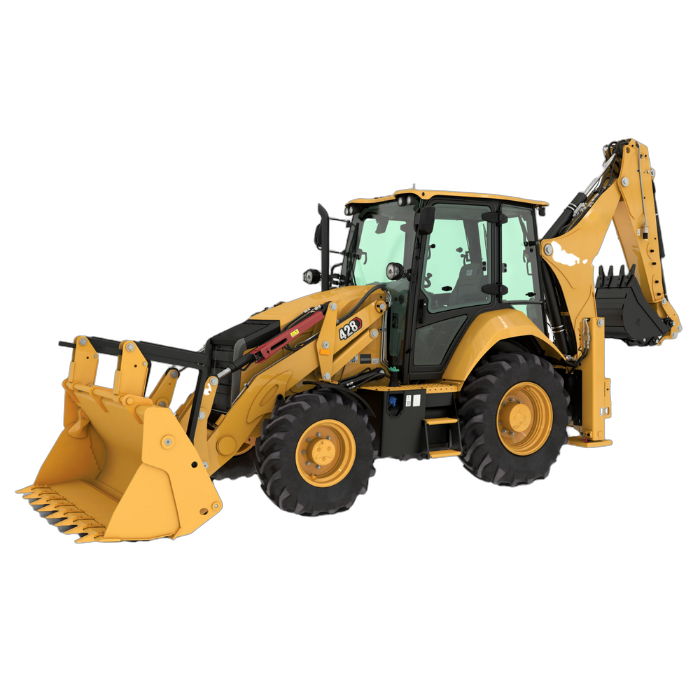
Mini excavators and backhoe loaders serve fundamentally different operational profiles. A mini excavator excels at precision, access and digging control. A backhoe loader delivers multi-function capability on open sites with the added advantage of self-propelled road travel between locations.
The wrong choice forces you to hire supplementary equipment for tasks outside the machine's capability — eroding the financial case for ownership.
Confined, urban or precision excavation sites — mini excavator. Open sites needing dig, load and road travel from one machine — backhoe loader.
What each machine does best
Task | Mini Excavator | Backhoe Loader |
|---|---|---|
Precision trench excavation | Strong | Moderate |
Deep trenching (4m+) | Larger models only | Strong |
Bulk material loading | Limited | Strong |
Confined site access | Strong | Poor |
Road travel between sites | Requires trailer | Self-propelled |
Working adjacent to structures | Strong (zero-swing) | Poor |
Grading and levelling | Moderate | Strong |
Backfilling | Moderate | Strong |
Post holes and auger work | With attachment | With attachment |
Agricultural / rural use | Limited | Strong |
→ If your work is primarily urban trenching, residential construction or anything requiring confined access, the mini excavator wins on almost every row that matters. If your sites are open and you regularly need to load and carry material — or drive between jobs without a trailer — the backhoe covers that scope from a single machine. See the mini excavator price and buying guide on IndustrySearch and the backhoe loader buying guide for deeper specification detail on each.
Head-to-head comparison
Factor | Mini Excavator | Backhoe Loader |
|---|---|---|
Digging depth | 1.5–5.5 m | 4.0–6.8 m |
Digging precision | High — independent boom, arm and bucket | Moderate — fixed rear boom |
Cab rotation | 360° full swing | Fixed — rear dig only |
Front attachment | Blade only | Full loader bucket |
Material loading | Not designed for loading | Core capability |
Ground pressure | Low — tracks spread load | Higher — wheeled |
Site mobility | Slow — tracks limit travel | Fast — road registered |
Transport requirement | Trailer required | Self-propelled to site |
Footprint | Compact | Large — open sites only |
Stabilisers required | No | Yes — for all rear digging |
→ The 360° cab rotation and low ground pressure of a mini excavator are decisive advantages on tight or surface-sensitive urban sites. The backhoe's road speed and front loader bucket are decisive on open multi-task sites. If neither machine clearly wins across your task mix, the cost comparison below will help resolve the decision.
Site access and footprint
Factor | Mini Excavator | Backhoe Loader |
|---|---|---|
Minimum site width | 750mm–1,500mm | 2,200mm–2,800mm |
Working near structures | Zero-swing — flush against walls | Requires clearance |
Urban residential sites | Standard | Often impractical |
Open rural / civil sites | Suitable | Preferred |
Stabiliser requirement | Not required | Required for rear dig |
Zero-swing mini excavators work flush against fences, walls and structures — a capability backhoe loaders cannot replicate. Backhoe stabilisers require clear ground on both sides of the machine, adding setup time and restricting use on tight or irregular sites.
→ Working urban residential or infill sites regularly? The access width gap alone — 750mm vs 2,200mm minimum — often makes the mini excavator the only viable option. Compare zero-swing mini excavator models in Sydney and Brisbane on IndustrySearch.
Attachment comparison
Attachment | Mini Excavator | Backhoe Loader |
|---|---|---|
Digging buckets | Yes | Yes (rear) |
Hydraulic breaker | Yes | Yes (rear) |
Auger | Yes | Yes (rear) |
Hydraulic thumb | Yes | Yes (rear) |
Tilt rotator | Yes | No |
Front loader bucket | No | Yes |
Pallet forks (front) | No | Yes |
4-in-1 front bucket | No | Yes |
Ripper | Yes | Yes (rear) |
The backhoe's dual-end capability — front loader bucket plus rear digging arm — is its defining advantage. No mini excavator attachment configuration replicates front-end loader capacity.
→ If front-end loader capability is a regular requirement on your sites, the backhoe's attachment range is decisive. If your attachment needs are digging-focused, the mini excavator covers the full scope — including tilt rotators the backhoe cannot run. Browse backhoe loaders on IndustrySearch to compare attachment compatibility by model.
Cost comparison
Cost Factor | Mini Excavator | Backhoe Loader |
|---|---|---|
New purchase price | $20,000–$80,000 | $30,000–$150,000 |
Used purchase price | $10,000–$45,000 | $20,000–$80,000 |
Daily hire rate | $350–$750/day | $550–$950/day |
Weekly hire rate | $1,500–$3,000/week | $2,200–$3,800/week |
Annual fuel cost | $3,500–$10,000 | $6,000–$16,000 |
Annual servicing | $2,000–$4,500 | $3,500–$7,000 |
Transport cost per move | $150–$400 | Nil — self-propelled |
Track / tyre replacement | $3,000–$8,000 (tracks) | $2,500–$6,000 (tyres) |
For operators moving between multiple sites daily, self-propelled road travel eliminates trailer costs. At $150–$400 per move, three to four site moves per week accumulates $23,000–$62,000 in transport costs over five years — a meaningful offset against the backhoe's higher purchase price.
→ The backhoe's higher purchase price closes quickly for high-frequency movers — but if your transport costs are already manageable, the mini excavator's lower fuel, servicing and purchase cost produces stronger total ownership economics. See the mini excavator price guide and the backhoe loader buying guide before approaching a lender.
Which machine for construction and civil work?
Mini excavator suits when:
Service trenching, footings or slab excavation require precision depth control
Urban or residential sites demand confined access or zero-swing capability
Work adjacent to existing structures is a regular requirement
Fleet transport logistics already support trailer movement between sites
Backhoe loader suits when:
Open sites combine dig-and-load workflows from one machine
Multiple sites require daily self-propelled road travel
Regional or rural contracts involve mixed earthworks across larger footprints
A single machine must cover all site functions without supplementary equipment
Australian compliance and licensing
No high-risk work licence required for mini excavator operation in most states — competency training and assessment mandatory under WHS obligations
Backhoe road travel requires registration and an appropriate driver's licence — confirm state-specific class requirements
WHS obligations — documented operator competency, pre-operational checks and plant maintenance records required for both machine types
ROPS and FOPS mandatory on all units — verify on any used or imported machine
Dial Before You Dig obligations apply to all excavation regardless of machine type
Stabiliser deployment — backhoe operators must assess and document ground conditions before rear digging operations
Supplier comparison checklist
Factor | What to Ask |
|---|---|
Task suitability | Which model suits my primary task mix — and why? |
Zero-swing availability | Do you offer zero-tail-swing models? |
Digging depth | What is maximum depth with standard and long-reach arm? |
Attachment compatibility | What attachments are compatible and stocked locally? |
Road registration | Is this unit road registered for self-propelled travel in my state? |
Warranty | What is covered — hydraulics, drivetrain, structure? Duration? |
Service network | Technicians in my state? Average response time? |
Used unit inspection | Full service history and pre-purchase condition report available? |
Frequently asked questions
Can a mini excavator replace a backhoe loader on most construction sites? On urban and confined sites, a mini excavator handles the core excavation scope a backhoe would otherwise perform. It cannot replicate front-end loader capability, self-propelled road travel or bulk material handling. For open sites where dig-and-load workflows dominate, a mini excavator requires a supplementary skid steer or wheel loader to cover loading tasks — eroding the cost advantage of the smaller machine.
Is a backhoe loader worth the higher price for small contractors? For contractors working across multiple open sites where one machine must cover digging, loading and road travel, the backhoe's higher price is offset by eliminating supplementary equipment hire and transport costs. For urban contractors on confined residential sites, the backhoe's size and access limitations typically outweigh its versatility — a mini excavator plus hired loading equipment is usually more productive and cost-effective.
How does road travel capability affect total cost of ownership? For operators making three to four site moves per week, self-propelled travel eliminates $23,000–$62,000 in trailer costs over five years — a meaningful offset against the backhoe's higher purchase price. For operators working from a single site or with existing transport infrastructure, this advantage diminishes significantly and the mini excavator's lower purchase and operating cost becomes the stronger financial argument.
Which machine holds its value better in Australia? Both retain residual value well from major brands. Backhoe loaders from Case, JCB, Caterpillar and John Deere typically retain 45–60% of purchase price at three years. Mini excavators from Kubota, Kobelco, Yanmar and Caterpillar perform similarly at 50–65%. Complete service records, current attachments and low hours command the strongest resale prices in both categories.
Do I need a licence to operate these machines in Australia? A high-risk work licence is not required for mini excavator operation in most states, but competency training and assessment is mandatory under WHS obligations. Backhoe loader road travel requires an appropriate driver's licence for the registered vehicle class — confirm the specific requirement with your state transport authority. Both machine types require documented pre-operational checks and plant records under Safe Work Australia regulations.
Summary
Mini excavator is the better choice for confined urban sites, precision excavation and work adjacent to structures
Backhoe loader is the better choice for open multi-task sites where dig, load and self-propelled road travel are all required
Purchase price gap is significant — $30,000–$150,000 for backhoes versus $20,000–$80,000 for mini excavators
Self-propelled road travel eliminates trailer costs — worth $23,000–$62,000 over five years for high-frequency movers
Zero-swing mini excavators provide confined access no backhoe can match
Many civil contractors run both — a midi excavator for primary digging and a backhoe for multi-task open or regional work
Ready to source your equipment?
Don't waste time contacting suppliers individually. IndustrySearch connects you with verified Australian suppliers of mini excavators and backhoe loaders — compare models, specifications and pricing in one place.
Compare models by digging depth, size class and application
Request quotes from multiple verified suppliers
Speak directly with suppliers servicing your state
→ Compare Mini Excavators and Backhoe Loaders on IndustrySearch Now



-160x160-state_article-rel-cat.png)