
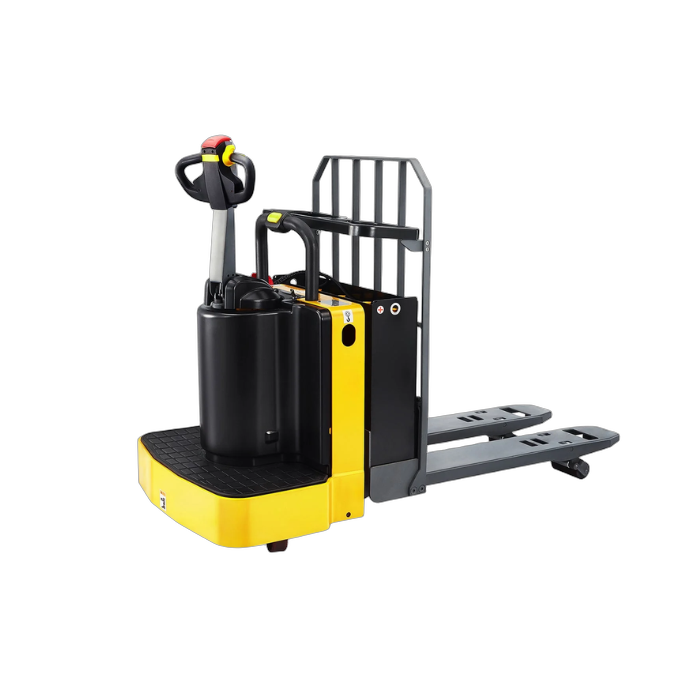

Ride-on pallet jack price guide Australia 2026: what you pay and when to step up
- What you will pay: Ride-on powered pallet trucks typically list from $5,000 to $15,000, with heavy-duty and premium lithium units reaching $22,000 or more. Walk-behind electric jacks run $3,000 to $8,000.
- No forklift licence needed: Pallet trucks, walk-behind or ride-on, do not require a high-risk work forklift licence in Australia, though operator training is still a legal must.
- Lithium versus lead-acid: Lithium costs more upfront but charges in 1 to 3 hours versus 6 to 8 for lead-acid, which is why multi-shift sites pay the premium.
- Why now: E-commerce growth is driving warehouse demand, and body stressing already causes about a third of serious workers compensation claims, so powered handling is both a productivity and safety change.
- The decision: Match capacity, travel distance, and shift length to the machine before you compare price, and step up to ride-on when the walking starts costing you.
A ride-on pallet jack is the machine that lets one operator shift pallets across a large site all day without walking every metre of it. It sits between the humble walk-behind electric jack and a full forklift, and choosing well comes down to how far your loads travel and how long your shifts run. This guide sets out what ride-on pallet jacks cost in Australia in 2026, the specs that change the price, and when it pays to step up from a walkie to a rider.
Why powered handling is worth the step up
Warehousing is one of the fastest-changing corners of the Australian economy. Transport, postal and warehousing employed about 745,400 people as at August 2025, with warehousing and storage services accounting for roughly 110,600 of those, according to Jobs and Skills Australia. Demand keeps climbing as online retail grows: CBRE reports e-commerce reached about 14% of retail in 2025 and forecasts it will need an extra 1.7 to 1.8 million square metres of logistics space over five years.
That growth puts pressure on the people doing the lifting. Safe Work Australia reports body stressing was the single largest cause of serious workers compensation claims, at 45,500 claims or 32.7% of the total, and the transport, postal and warehousing sector carries an injury frequency rate above the national average. A powered pallet jack takes the strain out of moving heavy loads and lets a worker cover more ground with less physical toll, which is where the return sits alongside the productivity gain.
What a ride-on pallet jack costs in Australia
Price scales with capacity, battery, and whether you ride or walk. Treat the bands below as a price guide for comparison rather than fixed quotes.
| Type | Typical price range | Best suited to |
|---|---|---|
| Hand pallet jack (for contrast) | $300 - $800 | Low volume, short distances |
| Walk-behind electric jack | $3,000 - $8,000 | Moderate volume, shorter hauls |
| Entry ride-on powered truck | $5,000 - $8,000 | Longer runs, full shifts |
| Mid-range ride-on | $8,000 - $12,000 | Busy distribution, higher throughput |
| Heavy-duty / premium lithium ride-on | $12,000 - $22,000+ | 3 to 3.5 tonne loads, multi-shift |
The ride-on category on the marketplace averages around $10,000. Used powered trucks sell well below new, and short-term hire is available by quote if you only need extra capacity for a peak. Whichever route you take, weigh total cost of ownership rather than the price tag alone: batteries, servicing, and charging infrastructure all add up over the life of the machine. A walkie stacker is a related option if you also need to lift pallets to height rather than just move them along the floor. Compare current listings on the ride-on pallet jack, electric pallet jack, and walkie stacker pages.
The specs that decide the price
These are the numbers to compare when you request quotes:
- Load capacity: Walk-behind units commonly carry 1,500 to 2,000 kg, while ride-ons typically handle 2,000 to 3,000 kg and heavy-duty models reach 3,500 kg. Match capacity to your heaviest regular pallet with margin.
- Battery type: Lithium-ion charges in 1 to 3 hours, tops up in breaks, and needs no watering, while lead-acid takes 6 to 8 hours and a ventilated charging area. Lithium costs more to buy but often less to run.
- Ride-on format: A fold-down platform lets the operator step on for longer hauls, while some larger units are seated. This is the core reason to move up from a walkie.
- Travel speed: Ride-ons run around 10 to 12.5 km/h, far quicker than walking pace, which is what makes them pay on long runs across a big site.
- Fork length and lift: Standard forks run about 1,150 mm, and low-lift trucks raise the load only around 120 to 205 mm for transport, not stacking.
- Aisle width and safety features: Check the minimum aisle the truck needs, plus features like automatic speed reduction on cornering, entry sensors, a belly-stop button, and creep speed.
Walkie or ride-on?
The choice comes down to distance and duty. A walk-behind electric jack is cheaper and fine for shorter hauls and moderate volumes. Once your operators are walking long distances all shift, a ride-on pays back in speed and reduced fatigue, since covering ground at 12 km/h instead of walking transforms how many pallets one person can shift in a day.
A realistic scenario
Consider a food distribution warehouse in Western Sydney where staff currently use walk-behind jacks to move pallets from a chilled dock to racking 80 metres away, dozens of times a shift. The walking is slow, and by afternoon the crew is worn down and picking rates drop.
A mid-range lithium ride-on around the $10,000 mark lets an operator ride the full run at speed, complete far more trips per shift, and finish less fatigued. Because it is a pallet truck, no forklift licence is required, though the site still provides documented operator training. Lithium suits the multi-shift pattern with fast opportunity charging between runs. The machine does not replace the team, it lets each person move more with less strain. For a sense of where to start and when to upgrade, the pallet jack price guide maps the step up from manual to powered handling.
Frequently asked questions
How much does a ride-on pallet jack cost in Australia?
Ride-on powered pallet trucks generally list from $5,000 to $15,000, averaging around $10,000. Entry units start near $5,000 to $8,000, while heavy-duty 3 to 3.5 tonne and premium lithium models can reach $22,000 or more. Walk-behind electric jacks run $3,000 to $8,000.
Do you need a forklift licence to operate a ride-on pallet jack?
No. A high-risk work forklift licence is not required to operate a pedestrian or ride-on pallet truck in Australia. However, employers must still provide operator training and safe systems of work under WHS law, so competency is a legal requirement even without a licence.
Should I choose a lithium or lead-acid battery?
Lithium-ion charges in 1 to 3 hours, supports opportunity charging between tasks, and needs no watering or ventilated charging room, which suits multi-shift operations. Lead-acid is cheaper to buy but takes 6 to 8 hours to charge. Weigh the higher lithium purchase price against its lower running cost.
When should I upgrade from a walk-behind to a ride-on?
Step up when your operators are walking long distances across the site for most of a shift. At that point the ride-on's travel speed and reduced fatigue lift how many pallets one person can move, and the productivity gain outweighs the higher purchase price.
What matters most
A ride-on pallet jack is a productivity and safety decision. Match the load capacity to your heaviest pallet, the battery to your shift pattern, and the ride-on format to your travel distances, then compare price. For long hauls across a big site, the speed and reduced strain of a rider earn back the extra outlay, and no forklift licence is needed to run one. Cost the batteries and servicing alongside the price tag, and you will buy a machine that keeps pace with your warehouse.
Want to compare capacity, battery, and pricing on powered pallet trucks? Get quotes from ride-on pallet jack suppliers across Australia here.


-160x160-state_article-rel-cat.png)




-160x160-state_article-rel-cat.png)

