
Key takeaways
- Equipment loss, idle time and poor utilisation are silent profit killers across construction, mining and civil contracting in Australia.
- GPS telematics is now baseline. The real return on investment comes from integrated platforms that combine location, utilisation, maintenance and compliance data.
- According to the Australian Bureau of Statistics, construction contributes more than $160 billion annually to Australia’s economy. Even a 5 percent improvement in fleet productivity can materially shift margins.
- Compliance with Chain of Responsibility laws and work health and safety obligations makes tracking data more than a convenience. It is a risk management tool.
- The best investment is not necessarily the most sophisticated technology. It is the system that integrates with your workflows, delivers actionable insights and is adopted by your people.
Introduction: why equipment tracking is now a board-level issue
If you operate in construction, mining, civil infrastructure, utilities or plant hire, you already know how expensive equipment fleets are. Excavators, generators, access equipment, light vehicles and specialised plant represent millions of dollars in capital. Yet many Australian businesses still rely on spreadsheets, manual sign-outs or informal processes to track them.
That approach is increasingly untenable.
The Australian construction sector employs more than 1.3 million people and represents around 9 percent of GDP, according to the Australian Bureau of Statistics. In mining, capital intensity is even higher, with industry revenue exceeding $400 billion in recent peak years based on IBISWorld data. When your asset base is this large, small inefficiencies compound quickly.
At the same time, regulatory scrutiny around safety and transport obligations has intensified. Under Australia’s Heavy Vehicle National Law, overseen by the National Heavy Vehicle Regulator, Chain of Responsibility obligations extend beyond drivers to company directors and managers. Location and usage data can be critical in demonstrating compliance.
So what is actually worth the investment?
Understanding your true cost of poor visibility
Before you evaluate technology, quantify the problem you are trying to solve.
Common pain points include:
- Equipment sitting idle on site while another project hires the same asset externally
- Delayed maintenance due to poor hour tracking
- Lost or stolen small plant
- Unauthorised after-hours use
- Inaccurate project costing due to weak utilisation data
According to industry surveys cited by the Master Builders Australia, cost pressures remain one of the biggest challenges for construction firms, with margins often below 5 percent. In that environment, underutilised plant is not a minor issue. It is margin erosion.
Realistic scenario: the hidden hire cost
Imagine you run a mid-sized civil contracting firm in Queensland with:
- 40 excavators
- 25 skid steers
- 60 light vehicles
- Assorted small plant
Project A hires two additional excavators for six weeks at $8,000 per week each because the site team believes the internal fleet is fully allocated.
After implementing GPS tracking and centralised fleet visibility, you discover that three excavators were idle on another site for over 50 percent of that period.
That single visibility gap could cost you close to $100,000 in unnecessary hire fees. Multiply that across a year and across multiple asset classes, and the investment case becomes clearer.
Core technologies explained: what are you actually buying?
Not all tracking systems are equal. Broadly, equipment tracking technologies fall into several categories.
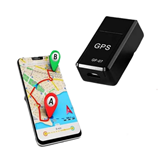
GPS telematics
This is the foundation layer. Devices installed on plants or vehicles provide:
- Real-time location
- Geofencing alerts
- Basic movement and ignition data
Strengths:
- Theft deterrence
- Site visibility
- Relatively low cost per unit
Limitations:
- Limited operational insight if not integrated with other systems
- Data overload without analytics
For many businesses, GPS telematics is the minimum standard in 2026. If you do not have it, you are behind the curve.
Bluetooth and RFID for small assets
Small tools and non-powered assets present a different challenge. Bluetooth beacons and RFID tags allow you to:
- Track high-value tools
- Manage warehouse inventory
- Reduce time spent searching for equipment
In high-turnover sectors such as fit-out or maintenance contracting, small asset loss can be significant.
IoT-enabled utilisation and condition monitoring
More advanced systems integrate:
- Engine hours
- Fuel consumption
- Vibration and fault diagnostics
- Preventative maintenance alerts
For mining and heavy civil operators, this level of data supports predictive maintenance and uptime optimisation.
In industries where downtime costs thousands of dollars per hour, the value proposition is strong.
Compliance and legal risk: an overlooked driver
Equipment tracking is often framed as an efficiency play. In Australia, it is equally a compliance tool.
Chain of Responsibility obligations
Under Heavy Vehicle National Law, businesses must ensure that transport activities are safe and compliant. The National Heavy Vehicle Regulator enforces these obligations.
Telematics data can help you demonstrate:
- Adherence to fatigue management
- Speed compliance
- Route adherence
- Maintenance scheduling
Failure to manage these risks can expose directors to significant penalties.
Work health and safety requirements
Under model Work Health and Safety laws adopted in most states, you have a primary duty of care to ensure, so far as is reasonably practicable, the health and safety of workers.
Tracking systems can:
- Monitor unauthorised equipment use
- Identify unsafe operating patterns
- Provide audit trails after incidents
If an incident occurs, digital records may be critical in demonstrating that reasonable steps were taken.
Evaluating return on investment
The most common question you will ask is simple. What is the payback period?
To answer it properly, consider four value buckets.
1. Theft and loss reduction
Equipment theft remains a real issue in Australia, particularly in construction. Even one recovered excavator can justify system costs for several years.
2. Improved utilisation
If your fleet utilisation increases by even 5 percent, the capital savings can be significant. According to the Australian Bureau of Statistics, private sector capital expenditure in construction and mining runs into tens of billions annually. Asset efficiency directly influences future capex decisions.
3. Maintenance optimisation
Preventative maintenance based on real usage hours reduces breakdowns and extends asset life.
This translates into:
- Lower repair costs
- Reduced downtime
- Higher resale value
4. Administrative efficiency
Manual timesheets, asset logs and reconciliation processes consume labour hours. Automation reduces administrative overhead and improves data accuracy.
When calculating ROI, include:
- Hardware costs
- Subscription fees
- Installation
- Training
- Integration with existing ERP or project management systems
Then quantify realistic benefits, not theoretical ones.
Integration: where many investments fail
Technology alone does not deliver value. Integration does.
If your tracking platform does not integrate with:
- Your fleet management system
- Payroll and timesheets
- Maintenance software
- Project costing tools
You risk creating another data silo.
Case study: integration done well
A Western Australian mining services company integrated telematics data with its maintenance software and payroll system.
Outcomes included:
- Automated service scheduling based on engine hours
- Reduced overtime claims due to accurate usage records
- Improved asset lifecycle planning
Within 18 months, the company reported measurable reductions in maintenance costs and improved fleet utilisation.
The key was not the device itself. It was the data ecosystem.
Buying criteria for Australian operators
When assessing vendors, focus on the following criteria.
Coverage and connectivity
Australia’s geography is vast. Remote mining and regional construction sites may have limited mobile coverage.
Ask:
- Does the system support satellite connectivity?
- How does it perform in low-signal areas?
- Is data buffered and uploaded later if offline?
Data ownership and security
Clarify:
- Who owns the data?
- Where is it stored?
- Is it compliant with Australian data protection expectations?
Data is a strategic asset. Treat it accordingly.
Scalability
Your fleet may grow or contract. Ensure the pricing model and platform architecture can scale without punitive cost increases.
User adoption
A technically excellent system that supervisors do not use is a wasted investment.
Prioritise:
- Intuitive dashboards
- Mobile access
- Training support
- Local customer service
Emerging trends shaping future investment
Looking ahead, several trends are worth monitoring.
Artificial intelligence and predictive analytics
AI-driven analytics can:
- Predict component failure
- Optimise fleet allocation
- Identify inefficient operator behaviour
As data sets grow, the value of advanced analytics increases.
Electrification and alternative fuels
As fleets electrify, new data points such as battery health and charging cycles become relevant. Tracking platforms must adapt.
ESG reporting and investor scrutiny
Investors increasingly scrutinise emissions and asset efficiency. Equipment tracking data can support sustainability reporting and decarbonisation strategies.
Making the right decision for your business
Ultimately, the question is not whether equipment tracking technology is valuable. It is which solution aligns with your strategy, scale and risk profile.
Before committing:
- Define clear objectives
- Theft reduction
- Utilisation improvement
- Compliance support
- Maintenance optimisation
- Run a pilot
- Select a representative asset group
- Measure baseline performance
- Compare post-implementation results
- Involve operations early
- Site managers
- Maintenance teams
- Finance
- Model realistic payback
- Conservative assumptions
- Sensitivity analysis
Conclusion: invest where insight meets action
Equipment tracking technology in Australia has matured. GPS alone is no longer a competitive advantage. Insight, integration and execution are.
In sectors where margins are tight and compliance expectations are rising, better asset visibility can shift your performance materially. The businesses that benefit most are those that treat tracking as a strategic capability rather than a gadget purchase.
If you approach the decision with clear objectives, rigorous ROI modelling and strong internal adoption, the investment can pay for itself many times over.
The technology is available. The real question is whether you are ready to use it to its full potential.
-160x160-state_article-rel-cat.png)

-160x160-state_article-rel-cat.png)