
Key takeaways
- What they cost: Food metal detectors on IndustrySearch list from around $1,000 for basic units to $30,000 for line-integrated systems, with averages sitting near $5,500 for entry models and $17,500 for higher-spec Sydney listings.
- What drives price: Aperture size, conveyor integration, sensitivity across ferrous, non-ferrous and stainless steel, reject mechanism, and QA reporting software separate a $3,000 unit from a $25,000 one.
- Why it matters: Metal caused 15 of 60 foreign-matter food recalls in Australia from 2021 to 2025, and the average direct cost of a recall runs into the millions.
- Tax angle: Most food metal detectors sit above the $20,000 instant asset write-off limit for 2025-26, so they usually go into the small business pool rather than a full immediate deduction.
- The decision: Cost the whole system - detector, reject, install, and testing regime - against your recall exposure, not just the price tag on the detector head.
If you run a food or beverage line in Australia, a metal detector is rarely optional. Major retailers demand it, your HACCP plan likely names it as a critical control point, and one missed metal fragment can trigger a recall that dwarfs the machine's cost. Yet pricing is opaque: quotes range from a few thousand dollars to well over $25,000 for what looks like the same job. This guide breaks down what you actually pay for, where the money goes, and how to size a detector to your line before you sign anything.
Why metal detection is a live issue in 2026
Physical contamination stays a persistent recall driver. Food Standards Australia New Zealand recorded 60 recalls due to foreign matter between 2021 and 2025, and metal was behind 15 of them, or 25 percent, second only to plastic. In 2025 alone, foreign objects accounted for 22 of the 92 recalls FSANZ coordinated, a meaningful share for a hazard that a properly specified detector is built to catch.
The cost of getting it wrong is steep. FSANZ has estimated the average direct cost of a food recall at around $10 million, before you count lost shelf space, retailer penalties, and the brand damage that lingers long after stock is pulled. Against that exposure, the difference between a $5,000 detector and a $20,000 one is small - provided the dearer machine is the one that actually fits your product and passes your customer's audit.
What a food metal detector actually costs
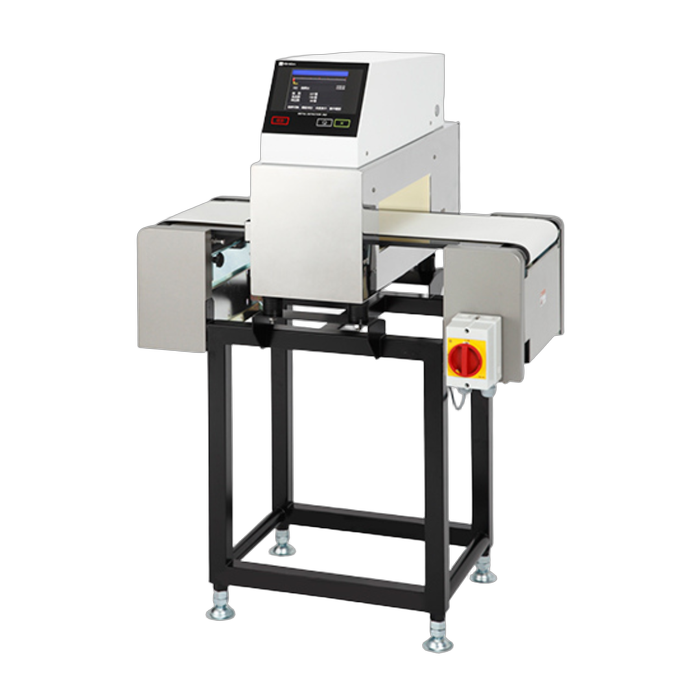
Pricing on the Australian market spans a wide band because "food metal detector" covers everything from a compact bench unit to a fully integrated conveyor system with automatic reject. On IndustrySearch, food metal detectors list roughly between $1,000 and $30,000, with entry-level averages around $5,500 and higher-spec metropolitan listings averaging closer to $17,500.
Here is the practical way to read those numbers by configuration:
| Configuration | Typical price band | Best suited to |
|---|---|---|
| Basic bench or drop-through unit | $1,000 to $6,000 | Low-volume producers, gravity-fed powders or granules |
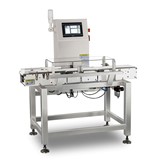
| Conveyorised detector with manual reject | $6,000 to $15,000 | Packaged product on an existing line |
| Line-integrated detector with auto-reject and QA reporting | $15,000 to $30,000+ | Supermarket-supplying manufacturers needing audit trails |
The jump from one band to the next is not markup for its own sake. You are paying for a fail-safe reject that confirms a contaminated pack has actually left the line, for multi-frequency detection that handles wet or conductive products, and for the reporting software that satisfies a retailer audit. Cut those to save money and you may simply move the risk downstream.
The specs that move the price
When you request quotes, these are the variables that separate a cheap unit from an expensive one. Match them to your product, not to the headline number:
- Aperture size: The tunnel opening must clear your largest pack, but sensitivity drops as the aperture grows. Oversizing "to be safe" quietly reduces the smallest fragment you can detect.
- Product effect handling: Wet, salty, or conductive foods like meat, cheese, and brine create signal noise. Multi-frequency machines built to filter this cost more but are the only real option for those products.
- Metal types detected: Ferrous is easy, non-ferrous harder, and stainless steel the toughest. Stainless is also the most common contaminant from broken blades and machinery, so detection across all three matters.
- Reject mechanism: A manual "stop and remove" is cheapest. An automatic air-blast or pusher reject with a lockable bin and fail-safe logic is dearer but often mandatory for retail supply.
- Reporting and validation: QA logging, self-test prompts, and data capture add cost but are frequently the deciding factor in passing a supermarket audit.
Metal detector or X-ray: where the extra spend goes
Some buyers weighing a mid-range metal detector should also price an X-ray food inspection system. X-ray catches glass, stone, dense plastic, and bone that metal detection cannot, and handles foil-packed or canned product where metal detectors struggle. It costs considerably more and carries radiation compliance obligations, so it earns its place only when your contamination risk is broader than metal alone.
Many lines also pair detection with a checkweigher, either as a combined unit or in sequence, so one pass covers both weight compliance and contamination. If you are choosing between combined and standalone setups, the guide to checkweighers with metal detection lays out where a dual-purpose system pays off and where it compromises both functions.
The costs that do not appear on the quote
The detector head is only part of your spend. Budget for total cost of ownership from day one rather than discovering it later:
- Installation and integration: Fitting a detector into an existing line, matching conveyor speeds, and wiring the reject can add thousands, especially in a tight or wet-area factory.
- Test pieces and validation: Certified ferrous, non-ferrous, and stainless test samples, plus a documented routine testing schedule, are ongoing costs your auditor will expect to see.
- Servicing and calibration: Regular calibration keeps sensitivity honest and defensible. Factor annual service into the running cost, not just the purchase.
- Training and downtime: Staff need to run tests, handle rejects, and log results correctly. A machine used wrongly gives false confidence, which is worse than none.
The tax and finance angle
Cash timing shapes the buying decision as much as spec does. For 2025-26, the instant asset write-off limit is $20,000 per asset for businesses with aggregated turnover under $10 million, with the asset installed and ready for use by 30 June 2026. A basic detector under that threshold can be written off immediately, but many line-integrated systems cost more and instead go into the small business pool, depreciating at 15 percent in the first year and 30 percent after.
That threshold changes the maths on where to draw your budget line. Spreading the cost through equipment finance is a common route: it preserves working capital, and the write-off rules generally apply regardless of whether you pay cash or finance the purchase.
A realistic scenario
Picture a Melbourne smallgoods manufacturer moving from a single supermarket contract to a national one. The retailer's supplier standard now requires validated metal detection with automatic reject and QA reporting on the packing line. The owner's first instinct is the $6,000 conveyor unit already quoted.
The problem: their product is wet, salted, and vacuum-packed, exactly the profile that defeats a single-frequency detector and forces false rejects. The realistic fit is a multi-frequency machine with fail-safe auto-reject and logging, closer to $22,000 installed. Because that exceeds the write-off limit, it goes into the depreciation pool, and the owner uses equipment finance to keep cash free for the extra staff the new contract demands. The dearer machine is not overspend - it is the only unit that passes the audit and keeps the contract.
Frequently asked questions
How much should I budget for a food metal detector?
Plan on $1,000 to $6,000 for a basic unit, $6,000 to $15,000 for a conveyorised detector, and $15,000 to $30,000 or more for a line-integrated system with auto-reject and reporting. Add installation, test pieces, and servicing on top.
Why do quotes vary so much for the same product?
Aperture size, multi-frequency handling for wet products, stainless steel sensitivity, reject type, and QA software are the big cost drivers. Two machines that look similar can differ sharply once you compare those specs against your actual product.
Do I need X-ray as well as metal detection?
Only if your risk extends beyond metal to glass, stone, bone, or dense plastic, or if you run foil and canned packs. X-ray costs more and adds compliance obligations, so match it to your genuine contamination profile.
Can I claim the cost on tax?
If the unit costs under $20,000 and your turnover is below $10 million, you may write it off immediately in 2025-26. Higher-cost systems generally go into the small business pool and depreciate over time. Confirm your position with your accountant.
What matters most
A food metal detector is a risk-management purchase, not a commodity. The right price is the one that buys a machine matched to your product, your line, and your customer's audit - wet-product handling if you need it, the right aperture, a fail-safe reject, and reporting that stands up to scrutiny. Cost the whole system against your recall exposure, factor in the tax treatment at your budget level, and remember that the cheapest detector that fails an audit or misses a fragment is the most expensive machine on the floor.
Want to spread the cost of line inspection equipment and keep your cash working? Compare equipment finance options and get a quick quote here.