



To perform a dry ice cleaning trial on a BMA excavator to give your fitters and electricians a cleaner working environment to identify mechanical and electrical problems clearer and earlier.
The trial was on the engine room and pump room.
Results:
Speed- 5 hours, the equipment was completely decontaminated.
Key Factors:
In dry ice cleaning, the equipments can be cleaned without moving them from their designated places.
Many time consuming, labour intensive steps are no longer necessary, including cool down, disassembly, transport of the equipment and reassembly. Our dry ice technology helps for better visual inspections, allowing fitters and electricians to identify problems earlier such as hot connections, and oil leaks. Dry ice cleaning technology has improved the availability and reliability of electrical equipment by increasing the maintenance intervals.
Dry ice cleaning process can effectively remove all production residues, contaminants, grease, release agents and oil.
Whatever calculation you use, sooner or later, the costs and consequences of a breakdown or failure in production resulting from dirty equipment can quickly exceed 1000% of cleaning costs.
When electrical panels are not cleaned, dust and dirt accumulate on the connections, which can provide high resistance paths that experts have attributed to nearly a third of electrical failures.
Downtime once measured in days or hours is now measured in minutes with dry ice cleaning.
Surface integrity and critical tolerances are preserved.
Dry ice cleaning will remove years of contaminant build-up and even grit remaining from previous cleaning. This process can reduce your cleaning time by 75%.
Due to the sublimation of dry ice, no secondary waste is created. Handling costs for disposal, containment and collection of waste are eliminated, reducing the clean-up and other labour time.
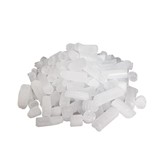
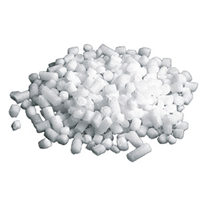
Dry ice cleaning is a revolutionary cleaning method that uses dry ice pellets (CO2 in solid form) as the cleaning material. Today, the dry ice method of cleaning is quickly becoming favoured for environmental as well as production reasons. Because of tremendous environmental regulations, industry has needed to minimize wastes. Also, there is a growing consciousness that many are placing now on the global environmental impact of their production practices. However, these benefits are accentuated due to the tremendous performance gains through cryogenic cleaning.—There is little or no production downtime, cleaning quality is enhanced and there is no damage to equipment.
Summary
Looking at all these benefits of our dry ice cleaning process, it becomes clear why companies are showing their faith in the process. Most of the companies want to minimize their industrial waste and there is no other better solution then dry ice cleaning for reducing environmental waste, production downtime and plant maintenance concerns.
Benefits of Dry Ice Cleaning
Significant downtime savings for revenue generating assets
- Safe, fast and efficient cleaning method
- Maximises production time; reduces maintenance downtime
- Completely dry process allowing immediate use of equipment
- Can be used on some equipment whilst still operating
- Non-conductive. Improves production quality
Extends life of revenue generating assets
- Non-abrasive; from gentle cleaning to maximum power cleaning
- Will not damage hydraulic/pneumatic hoses; electrical cable insulation or electronic components
- Encourages more frequent cleaning of difficult jobs, prolonging equipment life and resale value
Significant maintenance savings
- Better quality visual inspections
- Reduces contamination risk. Cleaning without dismantling
- Leaks can be identified more easily reducing the risk of serious failure
- Significant reduction in labour-intensive cleaning
- Enables maintenance staff to continue working on higher maintenance priorities
- Increases job satisfaction of maintenance personnel
Environmentally friendly
- Does not require water and no secondary waste
- No need for environmentally damaging chemicals; non-toxic
- No chemicals reduces requirements for PPE and chemical storage
-160x160-state_article-rel-cat.png)











-205x205.jpg)


-205x205.jpg)
