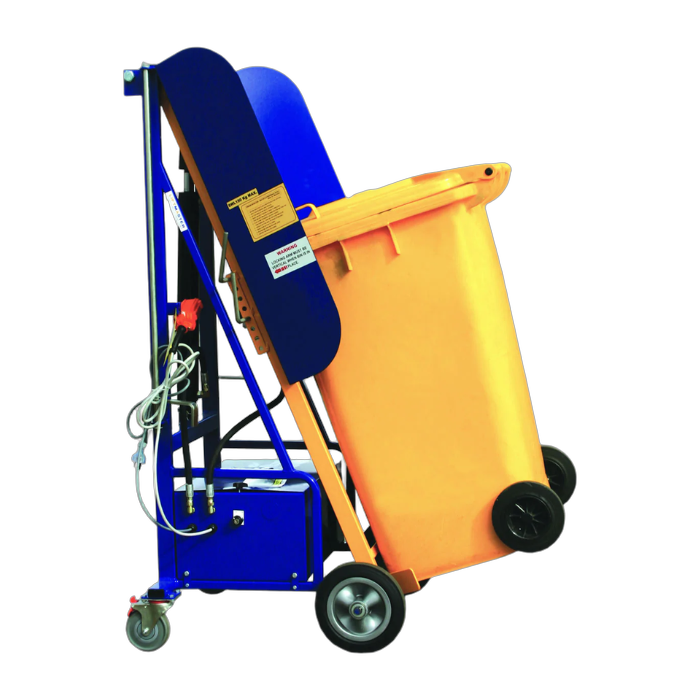

Key takeaways
| Factor | Manual Handling | Bin Lifter |
|---|---|---|
| Upfront cost | $0 | $5,000–$15,000 (electric) |
| Annual labour cost (30 bins/shift) | $15,000–$25,000 | $2,500–$5,000 (80% less operator time) |
| Injury risk profile | High — #1 cause of serious workers’ comp claims | Eliminated — engineering control removes the hazard |
| Average serious claim cost | $12,000–$30,000+ direct (Safe Work Australia) | N/A — hazard eliminated |
| Payback period | N/A | 4–12 months on labour savings alone |
| WHS hierarchy position | Administrative controls (training, rotation) | Engineering control — preferred tier under WHS Act 2011 |
→ Compare bin lifter models and pricing on IndustrySearch
Why this comparison matters
Manual bin emptying is one of the most predictable sources of workplace injury in Australian warehouses, manufacturing plants and food processing facilities. Safe Work Australia data shows body stressing (lifting, carrying, pushing) as the leading mechanism of serious workers’ compensation claims. This article quantifies the true cost of continuing manual handling vs investing in a bin lifter — covering labour, injury risk, compliance exposure and ROI.
Labour cost: Side-by-side
| Metric (30 bins/shift, 250 days/year) | Manual | With Bin Lifter |
|---|---|---|
| Time per bin empty (80–120 kg) | 3–5 minutes | 30–60 seconds |
| Daily labour on bin emptying | 90–150 minutes | 15–30 minutes |
| Annual labour hours | 375–625 hours | 63–125 hours |
| Annual cost (at $40/hr loaded rate) | $15,000–$25,000 | $2,500–$5,000 |
| Annual saving | — | $10,000–$20,000 in recovered labour |
The labour saving alone typically covers a mid-range electric bin lifter ($5,000–$10,000) within 6–12 months. Two-shift operations or heavier loads see payback in under 6 months.
Safety risk & injury cost
Musculoskeletal disorders account for approximately 55% of all serious workers’ compensation claims in Australia, with direct costs per serious claim exceeding $12,000 and severe cases reaching $30,000–$50,000+. Indirect costs — replacement staff overtime, incident investigation, potential regulator enforcement — typically multiply the total impact by 2–3×.
| Risk Factor | Manual Handling | Bin Lifter |
|---|---|---|
| Musculoskeletal injury | High — repetitive lifting, bending, twisting | Eliminated — no manual lifting |
| Spillage and slip hazard | High — uncontrolled tip | Low — controlled angle and speed |
| WHS hierarchy position | Administrative controls | Engineering control (preferred tier) |
| Regulator scrutiny | Increasing — inspectors expect engineering controls where practicable | Demonstrates proactive risk elimination |
A single serious manual handling injury can cost more than a bin lifter. A $15,000 claim plus 2× indirect costs ($30,000 total) exceeds the price of two mid-range electric bin lifters.
ROI calculation
| Variable | Conservative | Aggressive |
|---|---|---|
| Purchase price | $8,000 | $8,000 |
| Annual labour saving | $10,000 | $18,000 |
| Avoided injury cost (annualised) | $2,000 | $5,000 |
| Annual running cost | $800 | $500 |
| Net annual benefit | $11,200 | $22,500 |
| Payback period | ~9 months | ~4 months |
Even on conservative assumptions, a mid-range electric bin lifter pays for itself within the first year. Multi-shift operations, heavier loads or sites with a history of manual handling incidents see faster returns. Workers’ compensation premium reductions compound the ROI over subsequent years as claim history improves.
WHS compliance position
Under the WHS Act 2011, PCBUs must eliminate risks so far as is reasonably practicable. Bin lifters sit at the engineering control tier — above administrative controls (training, procedures) and PPE. Continuing to rely on manual handling when a bin lifter is a practicable alternative exposes the business to enforcement action. SafeWork NSW and WorkSafe Victoria have specifically targeted manual handling practices in warehouse and manufacturing audits.
When manual handling is still acceptable
Not every bin task justifies a powered lifter. Manual handling may remain appropriate where bins weigh under 15–20 kg, emptying frequency is under 5 times/day, and the task doesn’t involve overhead lifting or twisting. Below these thresholds, the WHS risk is low and the investment may not be reasonably practicable. Above them, the business case for a bin lifter is clear-cut.
Frequently asked questions
How quickly does a bin lifter pay for itself?
Most operations see payback within 6–12 months on labour savings alone. Sites running 50+ bins/day or two shifts can recover the investment in under 4 months.
What is the average cost of a manual handling injury in Australia?
Serious claims average $12,000–$30,000+ in direct costs (Safe Work Australia). Indirect costs (overtime, lost productivity, investigation) typically double the total financial impact.
Can a bin lifter reduce workers’ comp premiums?
Yes — fewer claims improve your experience rating, which directly reduces premium calculations in most Australian states. The premium reduction compounds over multiple years.
Do i need a risk assessment before purchasing?
A documented hazardous manual tasks risk assessment per the model Code of Practice should precede purchase. This ensures the bin lifter specification matches identified risks and demonstrates due diligence.
Is a bin lifter considered an engineering control?
Yes — it sits at the engineering control level in the WHS hierarchy, above administrative controls and PPE. This is the preferred tier under the WHS Act 2011 when full elimination isn’t practicable.
Compare bin lifters on IndustrySearch
IndustrySearch connects you directly with verified Australian bin lifter suppliers — compare models, specs and pricing to find the right unit for your operation.
- Compare manual, electric and high-tip models by capacity and construction
- Request quotes from multiple verified suppliers with a single enquiry
- Speak directly with suppliers servicing your state
→ Compare Bin Lifters on IndustrySearch Now →