





How this page helps you choose the right laser cutting machine
Choosing the right laser cutting machine comes down to a handful of decisions. Here we walk you through the ones that matter most to help you make a choice that meets your needs and your budget, without any expensive surprises after delivery. When you're ready, use our popular Get Quotes option to connect with verified Australian suppliers so you can compare quotes and buy with confidence.
Three common laser cutter setups
What a laser cutting machine costs, by power class
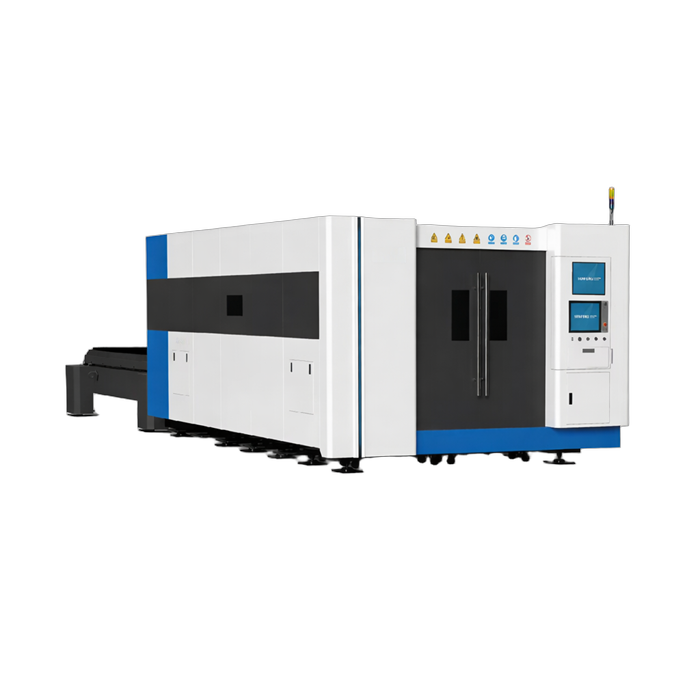
A laser cutting machine runs from about $50,000 for an entry fibre machine that cuts light gauge to $400,000 or more for a high-power machine with automated loading, and the top end climbs past $1,000,000 once you add a material tower and bulk gas. Laser power sets the band, because it sets the thickness and speed you can cut. Brand tier then changes the price within it.
| Power class | Typical price AUD, usually quoted before GST | Best fit |
|---|---|---|
| Entry (1 - 2 kW) | $50,000 - $120,000 | Signage, brackets, and thin sheet where speed on light material matters most |
| Job shop (3 - 4 kW) | $120,000 - $280,000 | The common all-round class: mixed mild steel, stainless, and aluminium for most fabrication shops |
| High output (6 - 8 kW) | $250,000 - $600,000 | Faster cutting and thicker plate for busy shops running long hours |
| High power and automated (10 - 12 kW+) | $500,000 to $1,000,000+ | High-volume production with automated load and unload |
Matching laser power to your material and thickness
This is the decision that sets the machine. Laser power in kilowatts controls the thickness you can cut and how fast you cut it. Size it to your thickest regular job and the speed you need, not to the heaviest plate you cut once a year. Too little power and you crawl on thick material. Too much and you pay for capacity you rarely use.
| Laser power | What it cuts indicative, varies by gas and edge quality | Best fit |
|---|---|---|
| 1 - 2 kW | Carbon steel to about 8 to 10 mm, stainless to about 4 to 5 mm. | Light gauge, signage, and thin sheet |
| 3 - 4 kW | Carbon steel to about 16 to 20 mm, stainless to about 8 to 10 mm. | The all-round job shop class |
| 6 - 8 kW | Faster on mid thickness, and carbon steel past 20 mm. | Busy shops cutting a mix of thin and thick |
| 10 - 12 kW+ | Thick plate at production speed. | High-volume and heavy plate work |
Thickness is not the whole story. Edge quality, cutting speed, and the assist gas you run all shift what a given power does. A higher-power machine also cuts thin material faster, so it can pay for itself on volume even when you rarely cut thick plate.
Choosing assist gas and the supply to run it
Cutting needs an assist gas to clear molten metal from the cut, and the gas you run changes both the machine spec and your running cost. This is one connected decision: the gas type, and the supply that feeds it. Get it wrong and gas becomes your biggest running cost after labour.
| Assist gas | Best for | Trade-off |
|---|---|---|
| Oxygen | Mild steel, especially thicker plate. It adds heat to the cut, so it cuts fast. | Leaves an oxidised edge that can need cleaning before paint or powder coat |
| Nitrogen | Stainless and aluminium, and any clean edge that goes straight to coating. | Used at high pressure and high volume, so it is the costly gas |
| Compressed air | Thin mild steel, stainless, and aluminium where edge demands are lighter. | Needs a clean, dry, high-pressure supply, and is limited on thicker or high-quality work |
Supply is the other half. Bottled gas suits low volume but stops production at every bottle change. A bulk tank or an on-site nitrogen generator cuts the per-cut cost for shops running nitrogen all day. A dedicated compressor and dryer can replace bottled gas for suitable air-cut work. Tell suppliers your main materials and volume so they size the gas system, not just the laser.
Sizing the bed and choosing how it loads
Two linked choices set the footprint and the throughput: how big the bed is, and how the sheet loads. A bigger bed handles bigger sheets with less nesting waste. Automation keeps the machine cutting while a sheet loads, which matters once you run long hours.
| Option | What it does | Best fit |
|---|---|---|
| Bed size | A 3000 x 1500 mm bed is the standard and matches common sheet sizes. Larger beds suit oversized plate. | Set it to your sheet sizes and the floor space you have |
| Single table | The operator loads and unloads each sheet by hand. | Low volume and lighter sheets, where the machine waits on the operator |
| Shuttle exchange table | A second table swaps in while the first is cutting, so loading does not stop the cut. | The common upgrade for a busy job shop |
| Automated tower | A material tower loads and unloads sheets without an operator, for lights-out running. | High volume and long shifts where uptime drives the return |
Buying a used laser cutter, new, or refurbished
Fibre lasers hold up well, so a used market sits alongside new. The call comes down to laser source hours, warranty, and how current the technology has to be for your work.
What the machine costs to run and own
The purchase price is the start. Assist gas, power, consumables, and servicing all feed into what the machine costs to run over its life, and gas is usually the one that surprises buyers.
| Cost area | What to expect | What moves it |
|---|---|---|
| Assist gas | Often the largest running cost after labour, especially high-pressure nitrogen for stainless. | Material mix, thickness, gas type, and bottles vs bulk vs a generator |
| Power | Three-phase power for the source, chiller, extraction, and compressor. Fibre machines are far more efficient than older CO2. | Laser power, hours run, and your material mix |
| Consumables | Nozzles, protective windows, and lenses wear and need replacing. Cheap each, but constant. | Hours cut, material, and how clean you keep the optics |
| Servicing | Scheduled servicing, chiller coolant, filters, and optics checks. | Hours run, machine size, and in-house vs dealer servicing |
| Parts and support | Downtime is the hidden cost. A nearby service agent with parts keeps the machine cutting. | Brand support network and distance to the nearest agent |
What to decide before you request quotes
You do not need every spec nailed down to get useful quotes. Pin these five down and suppliers can price the right machine the first time, instead of sending back a guess.
| 1 | Materials and thickness: the metals you cut, your usual and maximum thickness, and your target parts per hour. This sets the laser power. |
| 2 | Sheet sizes and footprint: your sheet sizes, the floor space you have, and your three-phase power supply. This sets the bed and what fits. |
| 3 | Assist gas plan: your main materials and volume, so suppliers can size the gas system and tell you bottles, bulk, or a generator. |
| 4 | Automation and volume: single table, a shuttle table, or an automated tower, based on your hours and throughput. |
| 5 | New, used, or budget basis: new or used, whether you are comparing on purchase price or monthly finance, and your delivery location. |
Finance options for your laser cutter purchase
A laser cutting machine is a large upfront cost, and the chiller, extraction, and gas system add to it. To spread that into a regular repayment, many buyers weigh equipment finance alongside the quote comparison. What finance looks like for your business comes down to the answers below. It is also worth checking how the purchase sits under the ATO small business depreciation rules.
| Finance question | What it helps you decide | Why it matters |
|---|---|---|
| What could the repayment be? | Whether the machine fits your cash flow before committing to a quote. | Laser cutters sit in a price range where a regular repayment is easier to weigh against the work it does than the upfront cost alone. |
| Am I likely to get approved? | Whether your business, trading history, and the machine's value are financeable. | IndustrySearch finance works across a panel of lenders, which can improve the chance of finding a suitable approval pathway. |
| Which finance structure suits the purchase? | Whether to compare chattel mortgage, lease, rental, or a balloon payment. | The right structure can affect ownership, cash flow, and how repayments line up with your income through the year. |
Finance calculator
Estimate my repayment
Adjust the sliders to estimate your laser cutter repayments. Speak with our team for an exact quote based on your profile.
Estimate only, not an offer of finance. Compare quotes and finance options for laser cutting machines.
Common laser cutter questions buyers ask before quoting
Quick answers to the most-searched questions about laser cutting machines and how IndustrySearch works.
Why use IndustrySearch to buy a laser cutting machine?
IndustrySearch helps you compare multiple reputable Australian suppliers with a single enquiry, saving you time and effort. Instead of contacting suppliers individually, you can compare suitable machines, technology, compliance requirements, service support, and ongoing consumables in one place. This helps you find the right laser cutter for your work while avoiding costly mistakes and making a more informed purchasing decision.
Why do suppliers list with IndustrySearch?
IndustrySearch has connected Australian buyers with industrial and manufacturing equipment suppliers since 2005. Suppliers list with us because they get pre-qualified leads from buyers who are actively in market, rather than tyre-kickers from generic search. Every supplier is vetted before listing, so you only see reputable Australian suppliers with the service capability to back up what they sell.
How much does a laser cutting machine cost?
An entry fibre machine for light gauge runs from about $50,000 to $120,000. The all-round job shop class at 3 to 4 kW sits around $120,000 to $280,000. High output machines at 6 to 8 kW run $250,000 to $600,000, and high-power machines with automated loading run from $500,000 to more than $1,000,000. Laser power sets the band, and brand tier swings the price within it. These figures are indicative and usually quoted before GST.
What laser power do I need?
Work back from your thickest regular job and your throughput. 1 to 2 kW suits signage and light gauge. 3 to 4 kW is the all-round job shop class, cutting mild steel to around 16 to 20 mm and stainless to around 8 to 10 mm. 6 to 8 kW cuts faster and thicker for busy shops. 10 to 12 kW and above is high-volume and heavy plate. Higher power also cuts thin material faster, so it can pay off on volume. These figures are indicative and vary by brand, gas, and edge quality.
Fibre or CO2 laser: which should I buy?
For metal sheet and plate, fibre is the standard choice now. It is more efficient, cheaper to run, faster on thin material, and needs less maintenance than CO2. CO2 still appears on some older machines and suits non-metals like acrylic and timber, which fibre does not cut well. For a metal fabrication shop buying a CNC laser cutter today, fibre is almost always the answer.
Do I need a licence to operate a laser cutting machine?
There is no national operator licence for a laser cutting machine like the high risk work licence used for some plant. The duty sits with the employer: under work health and safety law you must train operators and manage the risks of the machine. It runs a Class 4 laser source but ships as an enclosed, interlocked product that is laser-safe in normal use, with the hazard arising mainly during service: see ARPANSA on laser classes. Add fume extraction, training, and safe work procedures, and check your state regulator.
Which assist gas should I use?
It depends on the material and the edge you need. Oxygen cuts mild steel fast, especially thick plate, but leaves an oxidised edge. Nitrogen gives a clean, coat-ready edge on stainless and aluminium, but it is used at high volume and is the costly gas. Compressed air works on thin material if you have a clean, dry, high-pressure supply. Most shops run a mix and size the gas supply to their volume.
Can a metal laser cutter cut steel, stainless, and aluminium?
Yes. A fibre laser cuts mild steel, stainless, and aluminium, plus brass and copper at higher power. The assist gas changes by material: oxygen or air for mild steel, nitrogen for a clean stainless or aluminium edge. Tell suppliers your full material mix so they size the power and gas system for all of it, not just steel.
Is it worth buying a used laser cutter?
It can be. Fibre lasers hold up well, so a low-hour used machine can cut as well as new for less. The real wear is in the laser source hours, the cutting head and optics, and the chiller, so check those and the service history rather than going on age. Ex-demo and refurbished machines, sometimes with warranty left, are a strong middle ground. See it cut your material before you buy.
How many hours is too many on a used fibre laser?
Hours on the laser source matter more than the machine's age. A well-maintained source can run many thousands of hours, and the head, optics, and chiller are often the parts that show wear first. Ask for the source operating hours and service history, and see it cut your material before you buy, rather than going on age alone.
How quickly can I get a laser cutter delivered?
In-stock machines from Australian dealers can arrive within a few weeks, including install and commissioning. Used and ex-demo are often fastest. Built-to-order machines, especially high-power units with automation, can take longer. Factor in three-phase power, gas supply, and extraction setup at your site. Ask each supplier what is in stock against your spec before you finalise it.
How long does finance pre-approval take?
Equipment finance pre-approval is usually quick, often within a few business days once you provide basic business and financial details. Pre-approval lets you compare quotes knowing your repayment and borrowing capacity, without committing to a purchase.
What documents do I need to apply for equipment finance?
For most equipment finance under a set threshold, lenders ask for limited paperwork: your business ABN and trading history, recent bank statements, and details of the machine being financed. Larger amounts can need business financials or tax returns. IndustrySearch finance works across a panel of lenders, so the exact requirements vary by amount and lender.
Why buyers choose IndustrySearch
Helping Australian industrial buyers compare suppliers since 2005.